
Resource Hub
Drain Guard Comparison Guide
Categories
Share

Effectively managing stormwater runoff starts with selecting the right drain guard to suit your site’s specific needs. Below is a side-by-side comparison of key Ultra-Drain Guard models, focusing on:
- Types of Pollutants Removed
The primary function of a drain guard is to filter out harmful pollutants such as sediment, hydrocarbons, heavy metals, and debris. Choosing a model that targets the contaminants specific to your site is critical for environmental compliance and waterway protection. - Containment Capacity
A drain guard’s ability to hold and manage runoff volume determines how well it performs during heavy rainfall or spill events. Higher capacity helps prevent overflow and ensures more effective filtration over time. - Reusability
Reusable models reduce waste and long-term costs. In sites with frequent runoff or spill risks, being able to clean and reuse the drain guard is a practical and sustainable benefit. - Use of Ultra-Filter-Tex Material
This geotextile enhances filtration of hydrocarbons and heavy metals—making it particularly important in high-risk or industrial sites. Its inclusion can significantly improve pollutant capture performance. - EcoSmart Designation
EcoSmart models support sustainability goals by using recycled materials or improving pollutant capture efficiency. They’re ideal for environmentally conscious worksites or organisations aiming to reduce their environmental footprint. - Adjustability
Drain guards with adjustable frames provide a better fit across a range of drain sizes, improving effectiveness and ease of installation—especially in diverse or older infrastructure. - Trim-to-Fit Capability
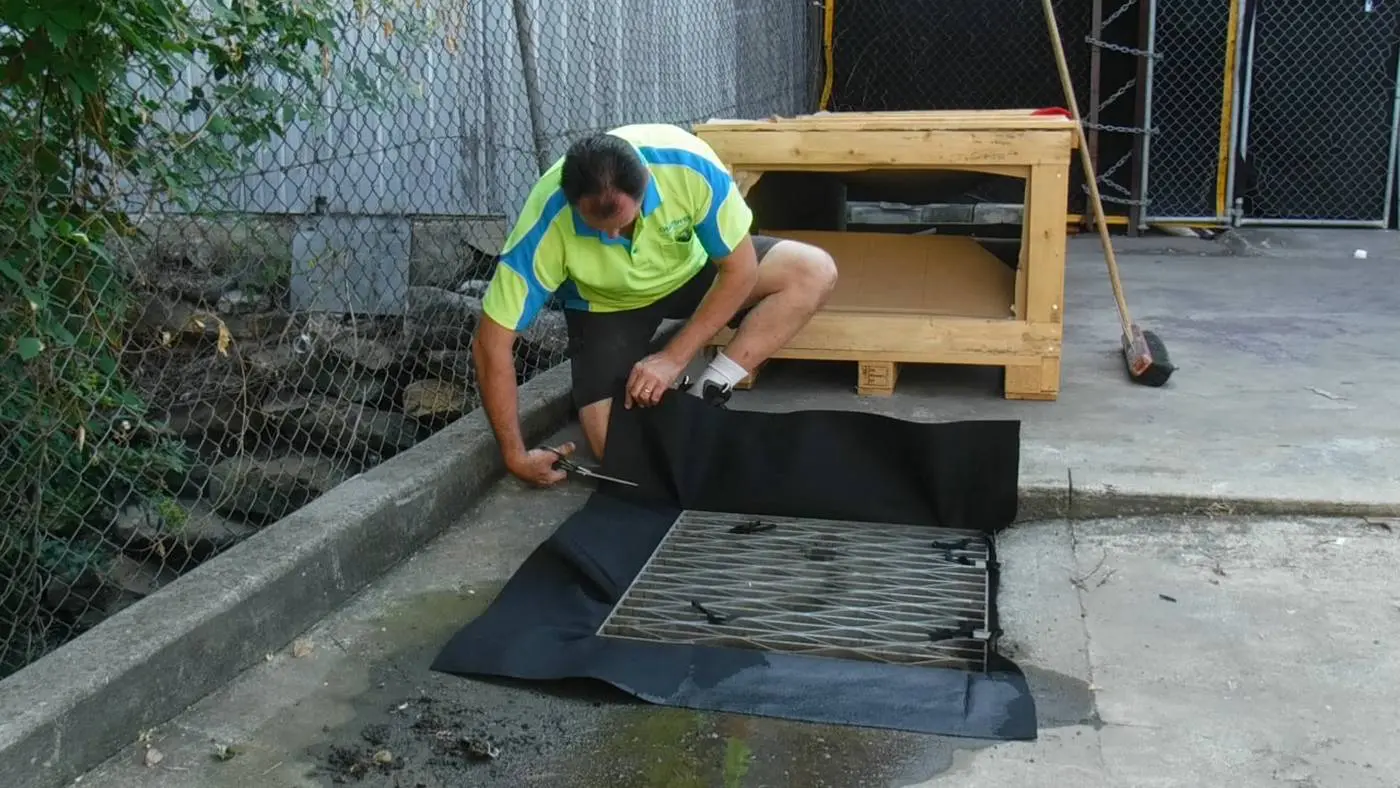
This feature allows for on-site customisation, ensuring compatibility with non-standard drain sizes. While useful, it’s typically a one-time adjustment during installation.