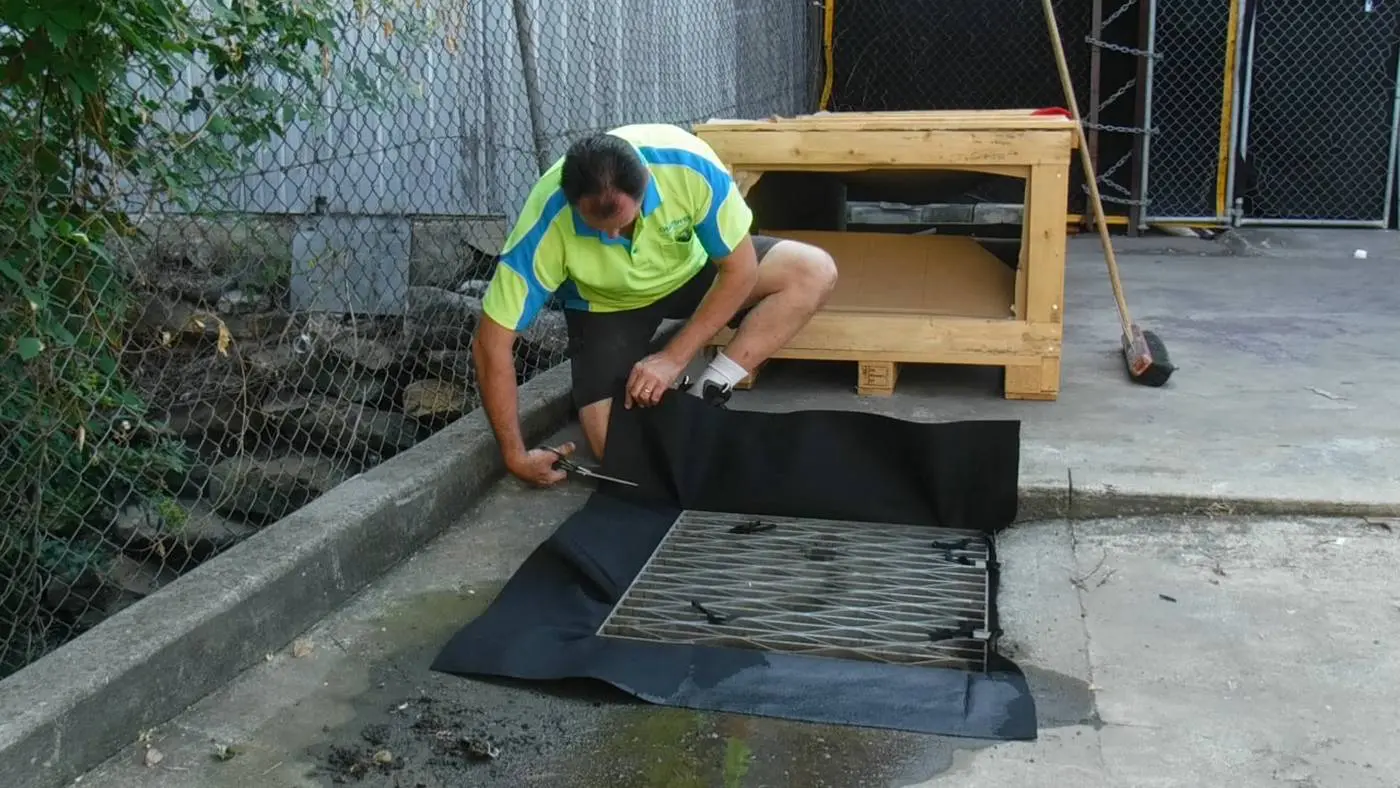

Sidewinder Cable Protection System
Showing all 3 results
-

Ultra-Sidewinder Cable Protection – Large
Price range: $104.50 through $308.00 (inc. GST)
-

Ultra-Sidewinder Cable Protection – Medium
Price range: $77.00 through $236.50 (inc. GST)
-

Ultra-Sidewinder Cable Protection – Small
Price range: $27.50 through $71.50 (inc. GST)
Extra Information
Sidewinder Cable Protection
Sidewinder Cable Protection for Australian Worksites
Sidewinder cable protection is a modular ramp system that sits over cables, leads and hoses running across a trafficked surface. It carries the wheel load above the cable, so vehicles and pedestrians cross without crushing the conductor or catching a foot.
Akuna Services stocks the Ultra-Sidewinder Cable Protection System in Small, Medium and Large, each with variant options so the run matches the cable you are protecting. We are 100 per cent Australian owned and operated, with same day dispatch Australia wide before 11 am.
3 sizes
Small, Medium and Large
UV stable
Built for continuous outdoor service
11 am
Order cut off for same day dispatch
100%
Australian owned and operated
On this page
- 01What Cable Protection Does and Why Sites Need It
- 02Our Range of Sidewinder Cable Protection Ramps and Covers
- 03Channel Sizes, Load Ratings and Vehicle Access
- 04Modular Sections, End Ramps and Corner Pieces
- 05Cable Protection for Events, Depots and Construction
- 06Crossing Points for Cables, Hoses and Leads
- 07Reducing Trip Hazards for Pedestrians on Site
- 08Protecting Cables from Crush Damage and Downtime
- 09UV Stable Construction Built for the Australian Sun
- 10Laying Out, Joining and Securing Cable Protection
- 11FAQs
What Cable Protection Does and Why Sites Need It
A cable lying loose across a haul road, depot yard or event walkway is exposed to every wheel and boot that passes. Sidewinder cable protection covers the run with a rigid channel and a sloped ramp each side, transferring load into the ground rather than the cable.
Under the WHS Regulations 2011 a person conducting a business or undertaking must manage risks so far as is reasonably practicable, and a cable across a pedestrian route is a hazard you are expected to control. AS/NZS 3012 covers electrical installations on construction and demolition sites, including protection of flexible cords from mechanical damage.
A covered crossing is a control an auditor can photograph. Hazard tape is not.
Our Range of Sidewinder Cable Protection Ramps and Covers
We stock three sizes in the Ultratech Sidewinder range:
- Ultra-Sidewinder, Small: light duty runs for extension leads, data cabling and small hoses.
- Ultra-Sidewinder, Medium: the general site size for power leads, air and water hoses and bundled cabling.
- Ultra-Sidewinder, Large: heavier runs carrying multiple cables or larger hoses.
Each size comes in multiple variants, so a run is configured to the cables it carries, not forced into one standard section. Call 1300 912 949 and we will confirm the size against your bundle.
Channel Sizes, Load Ratings and Vehicle Access
Size selection is driven by two numbers: the diameter of what goes in the channel, and the weight of what crosses it.
| Size | Typical contents | Typical crossing |
|---|---|---|
| Small | Extension leads, data and control cabling | Foot traffic, light vehicles |
| Medium | Power leads, air and water hoses, small bundles | Utes, vans, light plant |
| Large | Multiple cables, larger diameter hose | Heavier yard vehicle movements |
Work the width from the bundle.
Worked example
- Two 32 mm leads side by side occupy 64 mm before any clearance, so a 64 mm channel will not close.
- Allow 10 to 15 per cent spare, taking that pair to roughly 72 mm of usable width.
If the lid does not seat flat, the cable is carrying the load, not the ramp.
Modular Sections, End Ramps and Corner Pieces
Sidewinder cable protection is modular. Sections join end to end for a crossing as long as the run requires, so a 12 metre yard crossing is built from sections and a damaged one is replaced alone.
End ramps taper the last section to the ground so a wheel or trolley rides on rather than strikes the edge, which keeps the run stable and stops sections walking out of line.
Where a run changes direction, corner and transition pieces keep the channel continuous. A cable forced around a hard corner outside the channel is exposed where traffic is heaviest, so plan the turns before the straights.
Cable Protection for Events, Depots and Construction
The same product solves the problem across very different sites:
- Civil and construction: power and air leads across access tracks and pedestrian routes.
- Events and public spaces: generator and lighting runs across walkways, with a defined public crossing.
- Depots and logistics: charging leads and hoses across forklift routes and loading areas.
- Mining and industrial: welding leads, compressed air and dewatering hose across plant roads.
- Utilities and local government: temporary supply, generator feeds and pump hose.
- Defence and marine: shore supply and temporary services across hardstand and wharf.
In each case the run is temporary, the traffic is not, and the cable is the cheapest item involved and the dearest to lose.
Crossing Points for Cables, Hoses and Leads
Reduce the number of crossings, then protect the ones that remain. Rather than letting six leads find their own way across a yard, route them to a single point and run them together through one protected line.
Hoses need the same treatment. A dewatering line or pump hose crossing a vehicle route is crushed as easily as a cable, and a burst line is downtime and a potential spill. See our spill kits and absorbents.
Reducing Trip Hazards for Pedestrians on Site
A cable across a walkway is one of the easiest trip hazards to eliminate. The ramp profile gives a gradual rise and fall instead of the abrupt edge a loose cable presents.
Two details matter on a pedestrian route. The first is the ramp taper, which lets a foot, a trolley wheel or a wheelchair cross rather than catch. The second is visibility, so the crossing is seen from a distance, not at the last step. On a public walkway, place it around pedestrian flow rather than cable convenience.
Protecting Cables from Crush Damage and Downtime
Crush damage is rarely obvious at the time. A vehicle rolls over an unprotected lead, the insulation deforms, and the fault shows up as a tripping circuit days later, by which point the cable is buried and takes hours to find.
The cost sits in the downtime, not the cable. A crushed welding lead or generator feed stops the work in front of it, and a damaged supply lead is a reportable hazard on most sites. A protected crossing removes that cause for the price of a few sections.
UV Stable Construction Built for the Australian Sun
Cable protection lives outside. An Australian summer on open hardstand will chalk and crack a polymer that was not stabilised for it, and a cracked ramp stops carrying load and becomes a hazard.
The Sidewinder range is built from UV stable polymer for continuous outdoor service, holding its impact resistance and ramp profile through repeated heat cycling. That matters most at depots and compounds where a run stays down for months. It also resists the fuels, oils and site chemicals a yard collects, so a ramp left down through a wet season is still serviceable.
Laying Out, Joining and Securing Cable Protection
Set the run out before anything goes down:
- 1Choose the crossing point. The shortest square crossing of the route, clear of turning circles and gateways.
- 2Measure the run. Count the end ramps in the section total, not just channel length.
- 3Size the channel. Measure the bundle, then add clearance so the lid closes flat.
- 4Lay the cable, then close the lid. Cables go in without tension, with slack outside the run so nothing is pulled taut at the entry.
- 5Join and align the sections. Connect section to section so the run stays straight and joints stay closed.
- 6Inspect it. Add the crossing to the inspection routine and check alignment after heavy traffic.
Runs that move out of alignment are usually runs laid without a straight set out or without end ramps fitted.
Order online or call 1300 912 949 and we will size the run with you.
FAQs
What size Sidewinder cable protection do I need?
Size from the bundle and the traffic crossing it. Measure the outside diameter of every cable in the run, add them together, then allow clearance so the lid closes flat. Call 1300 912 949 with those figures and we will confirm the size.
Can vehicles drive over Sidewinder cable protection?
Yes, provided the size is rated for the vehicle crossing it. Match it to the heaviest wheel load at that point, not the average, and check the lid seats flat.
Is cable protection required on Australian worksites?
Managing the risk is required. Under the WHS Regulations 2011 you must control risks so far as is reasonably practicable, and AS/NZS 3012 addresses protection of flexible cords on construction sites. Covering the run demonstrates that control to an auditor.
How long does Sidewinder cable protection last outdoors?
The range is built from UV stable polymer for continuous outdoor service, so it holds up through Australian summer exposure rather than cracking in a season. Service life depends on the traffic carried and whether sections stay aligned, and single sections can be replaced without pulling up the run.
Do you deliver Australia wide?
Yes. Products ship Australia wide with same day dispatch on orders placed before 11 am. Onsite services, including installation and environmental risk assessment, are primarily New South Wales, with limited coverage into Queensland and Victoria through contractors and partners. Order online or call 1300 912 949 and we will size the run with you.
Want to book a spill training session?
Get in touch with our expert team and we will guide you through the process.