
Resource Hub
Oil Containment Boom for Rivers and Dams: Protecting Freshwater Resources
Categories
Share
Oil Containment Boom for Rivers and Dams: Protecting Freshwater Resources
Australia’s rivers and dams are critical freshwater assets supporting drinking water, agriculture, industry and ecosystems. When oil or fuel enters these waterways, the impact can spread quickly and extend far beyond the original spill site.
For councils, utilities, contractors and asset owners operating near inland water, having the right oil containment boom for rivers and dams is essential for environmental protection and regulatory compliance.

Why Oil Spills in Rivers and Dams Are High Risk
Spills in inland waterways present unique challenges compared to coastal environments.
Rapid surface spread
Oil travels quickly across calm or slow moving water. In rivers, even moderate current can carry contamination downstream, affecting multiple sites.
Sediment interaction
Oil can bind with suspended sediment, making recovery more complex and increasing long term environmental impact.
Sensitive water uses
Many rivers and dams supply drinking water, irrigation systems and recreational areas. A single incident can disrupt operations, trigger investigations and damage public trust.
Early containment is critical to limiting environmental harm and clean up costs.
Oil Containment Booms Designed for Calm Water Conditions
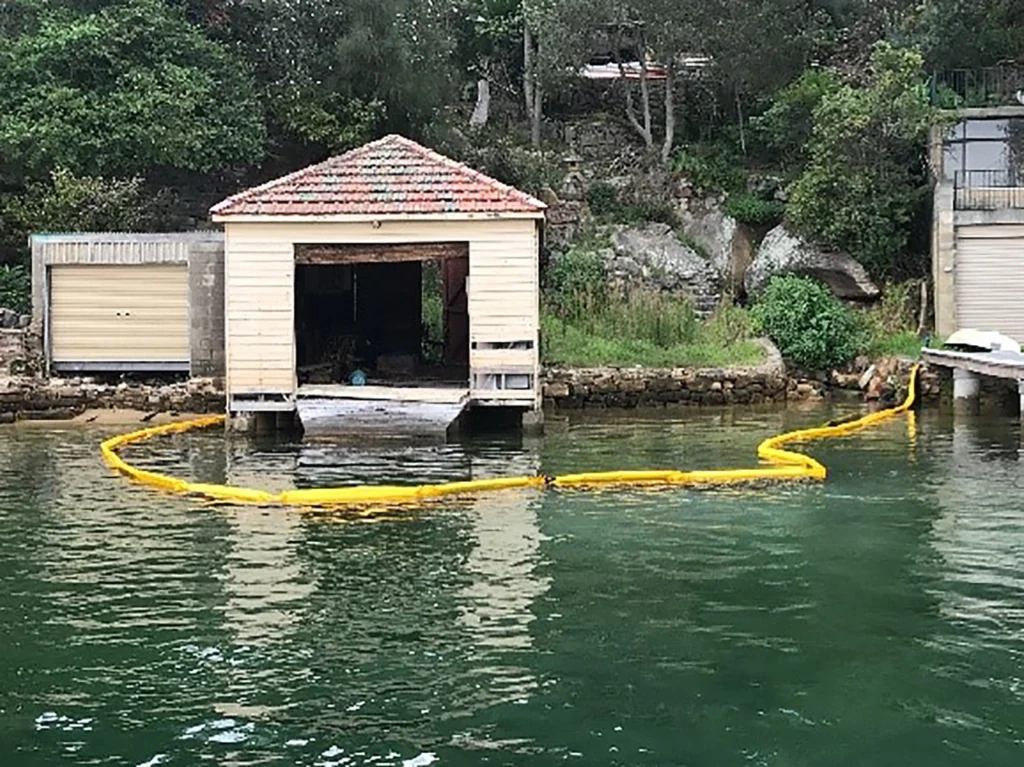
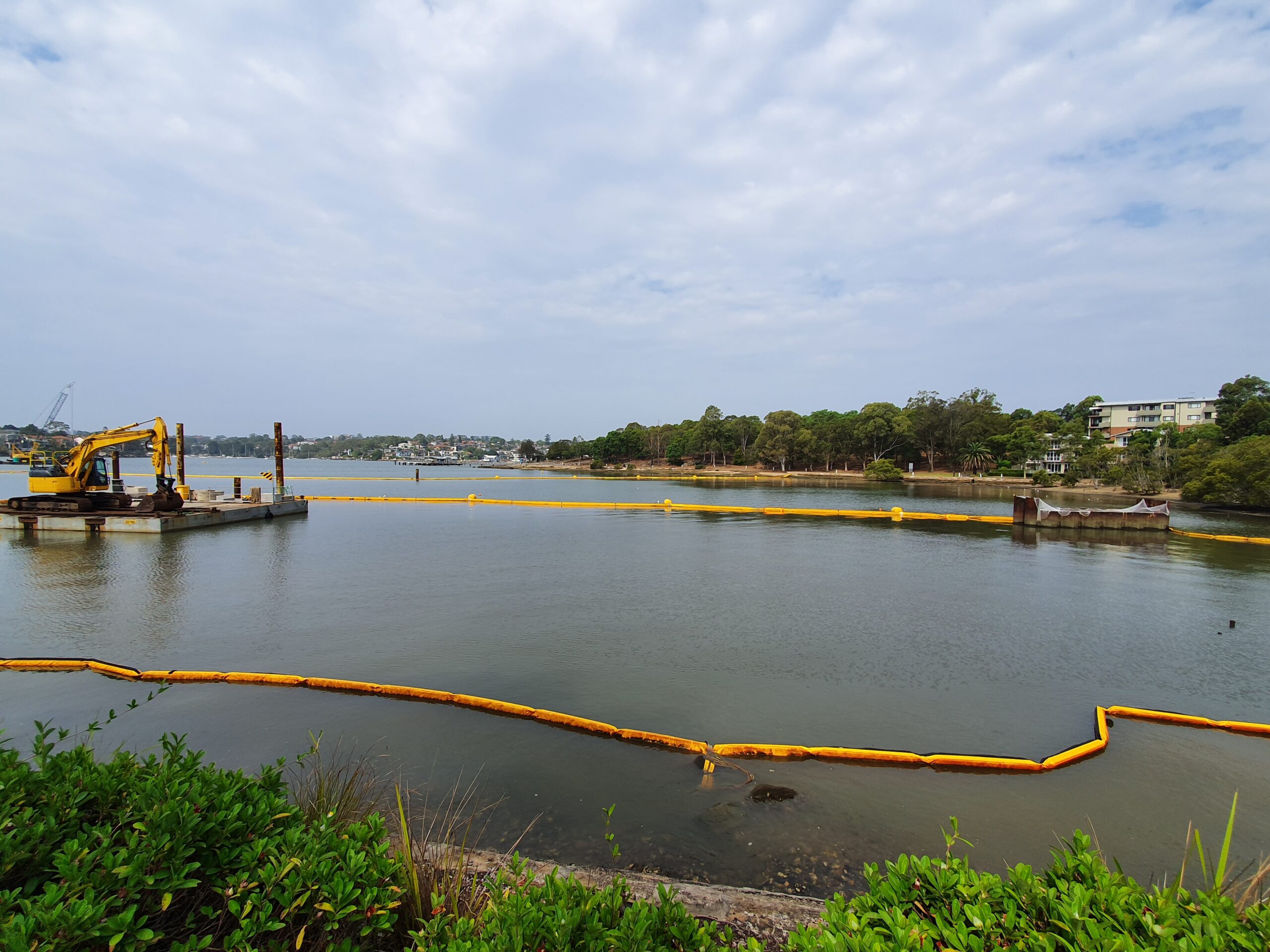
An oil containment boom is a floating barrier that prevents oil from spreading across the water surface. For inland applications such as rivers, dams and reservoirs, booms are engineered specifically for calm to moderate flow conditions.
These systems are commonly used in:
- Rivers and creeks
- Dams and reservoirs
- Stormwater basins
- Ponds and lagoons
- Construction and infrastructure projects near water
Choosing the correct boom for freshwater conditions ensures reliable performance without over specifying offshore grade equipment.
Key Features of an Effective Inland Oil Containment Boom
When selecting an oil containment boom for rivers and dams, look for the following features:
1. High Buoyancy
Strong flotation maintains consistent freeboard and keeps the boom stable on the water surface.
2. Continuous Skirt
A weighted skirt below the waterline reduces the risk of oil escaping underneath, particularly in flowing water.
3. Flexible, Modular Sections
Boom sections should adapt to riverbanks, embankments and irregular shorelines. Modular connectors allow systems to be scaled to suit site requirements.
4. Fast Deployment
Lightweight construction and simple connection systems support rapid installation during an emergency response.
Meeting EPA and Local Council Requirements
Organisations operating near inland waterways must comply with state and local environmental legislation.
In New South Wales, the Protection of the Environment Operations Act 1997 (POEO Act) requires occupiers to prevent water pollution and take reasonable steps to minimise environmental harm. Similar legislation applies across all Australian states and territories.
Businesses are expected to:
- Prevent pollutants entering waterways
- Maintain effective spill response measures
- Notify authorities of pollution incidents
- Demonstrate due diligence in environmental management
Failure to contain a spill can result in significant fines, remediation orders and reputational damage.
Including oil containment booms in your spill response plan supports compliance with EPA regulations, development consent conditions and environmental management plans.
Protect Your Freshwater Site
Oil spills in rivers and dams can lead to environmental damage, regulatory action and costly clean up works. A properly specified oil containment boom for freshwater environments is a practical and effective control measure.
If your site operates near a river, dam or inland waterway, now is the time to review your spill preparedness.