

Resource Hub
Turbidity Curtain for Compliance Requirements: Meeting EPA and Local Standards
Categories
Share
Regulatory Requirements for Sediment Control
Environmental regulation around sediment control in marine and inland waterway projects continues to tighten across Australia. Authorities such as the EPA and local councils require effective measures to minimise turbidity and protect aquatic environments during construction, dredging, and remediation works.
For contractors and project owners, compliance is not discretionary. Meeting these requirements is essential to maintaining approvals, avoiding enforcement action, and ensuring projects proceed without interruption.
The Risk of Non-Compliance
Failure to implement adequate sediment control measures can expose projects to significant operational and financial risk. Inadequate controls may lead to:
- Costly fines and enforcement penalties
- Project delays, stop-work notices, or shutdowns
- Damage to reputation, stakeholder confidence, and client relationships
Beyond commercial consequences, non-compliance can also result in lasting harm to sensitive marine and freshwater ecosystems. Elevated turbidity degrades water quality, impacts habitats, and undermines environmental protection objectives.
Turbidity Curtains as a Proven Compliance Control
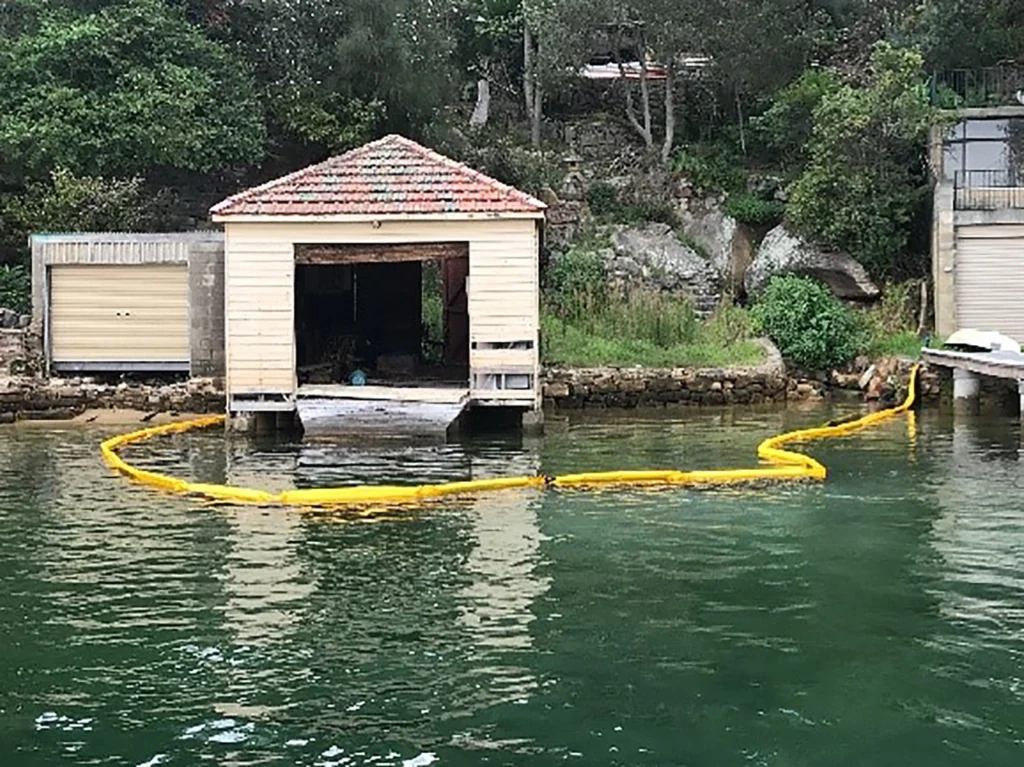
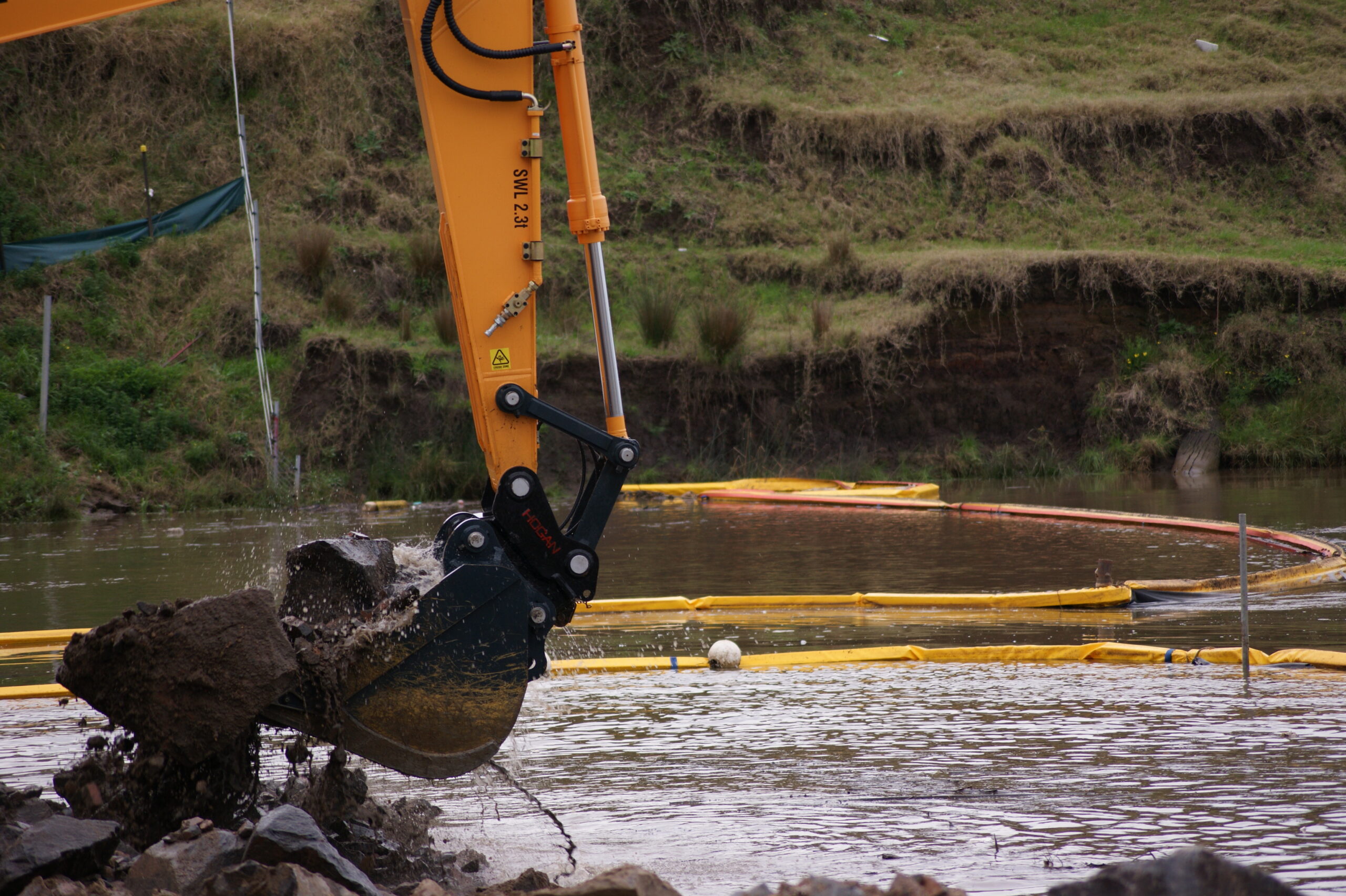
Turbidity curtains, also referred to as silt curtains, are widely recognised by regulators as an effective control measure for managing sediment dispersion. These floating containment systems form a physical barrier around the active work area, restricting the movement of suspended sediments and allowing them to settle within the controlled zone.
When correctly specified and installed, turbidity curtains support compliance by:
- Containing sediment within the approved work footprint
- Reducing turbidity impacts on surrounding waterways
- Demonstrating alignment with EPA and local authority requirements
As a result, they play a critical role in environmental management plans and construction method statements.
Key Compliance Considerations When Selecting a Turbidity Curtain
To meet regulatory expectations, turbidity curtains must be selected based on site conditions and project duration. Not all curtains offer the same level of performance or compliance assurance.
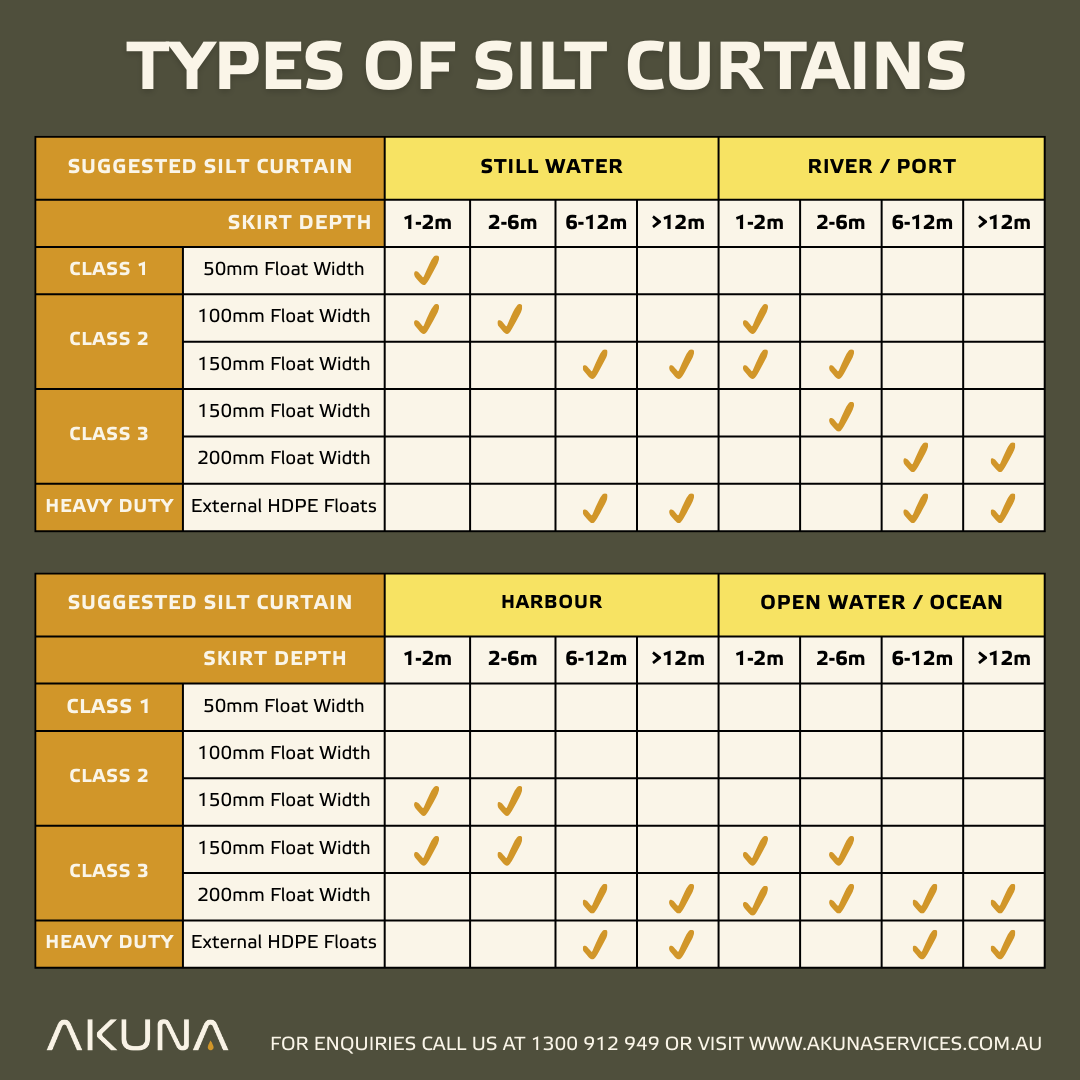
1. Correct Curtain Class for Site Conditions
- Class I: Suitable for calm or sheltered waters with minimal current
- Class II: Designed for moderate currents and semi-exposed environments
- Class III: Heavy-duty curtains for strong currents, wave action, and harsh marine conditions
Selecting the appropriate class is essential to ensure stability, containment, and ongoing effectiveness.
2. Durable, Site-Appropriate Materials
Compliance-ready curtains should be manufactured from UV-resistant, reinforced fabrics capable of withstanding prolonged exposure to sunlight, abrasion, and water movement without degradation.
3. Proper Flotation and Ballast Design
Adequate flotation maintains freeboard above the waterline, while correctly weighted ballast ensures the curtain remains vertical and prevents sediment escape beneath the barrier.
4. Alignment with Regulatory Guidelines
Curtain systems should be designed and supplied in accordance with EPA guidance and local authority expectations, supporting approval conditions and inspection requirements.
Supporting Compliance Through Best Practice
Using a compliant turbidity curtain system not only reduces environmental risk but also strengthens project governance. It demonstrates due diligence, supports audit and reporting processes, and provides assurance to regulators and stakeholders alike.
Ensure Your Project Meets Compliance Requirements
Effective sediment control is a fundamental requirement for compliant waterway projects. Turbidity curtains are a proven and regulator-recognised tool for managing turbidity and protecting aquatic environments.
To support your next project:
Download our Silt Curtain Design Checklist and Silt Curtain Comparison Guide to ensure you select the right turbidity curtain system for your site conditions and regulatory obligations.