
Resource Hub
Floating Debris and Weed Boom for Blue-Green Algae Prevention
Categories
Share
Why Blue-Green Algae Is a Growing Concern
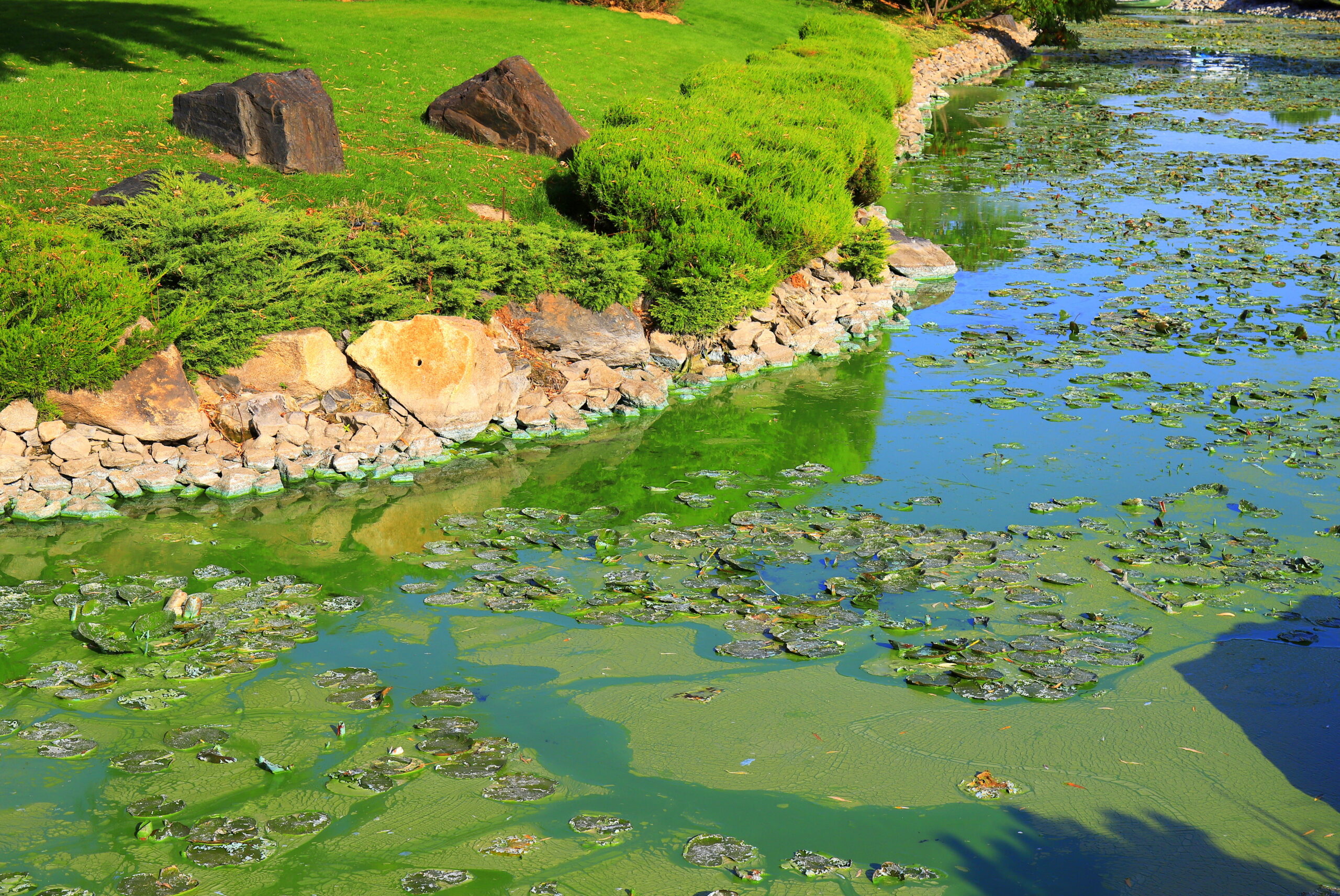
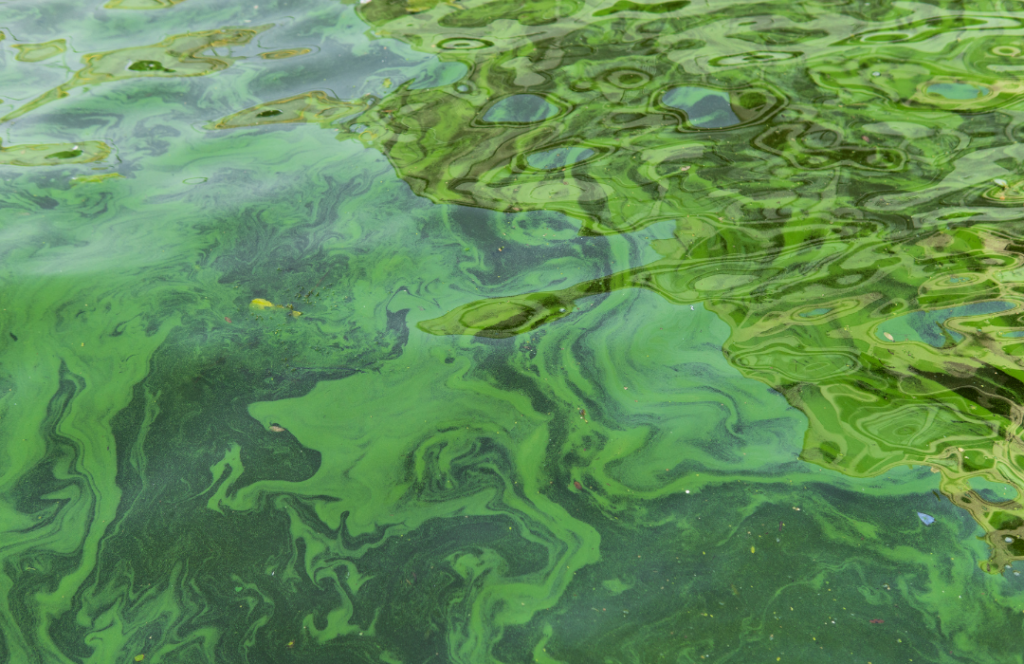
Blue-green algae, also known as cyanobacteria, is becoming an increasing threat to Australian waterways. Warmer temperatures, nutrient runoff and stagnant water conditions are driving more frequent and severe algal blooms across lakes, reservoirs and municipal water bodies.
For councils, water authorities and environmental managers, preventing the spread of blue-green algae is critical. Once established, blooms can move quickly across the water surface, impacting water quality, public health and aquatic ecosystems.
Early containment plays a vital role in reducing risk.
Environmental and Health Risks of Algal Blooms
Blue-green algae blooms present serious consequences for both people and the environment.
Public health risks
Exposure can cause skin irritation, respiratory issues and gastrointestinal illness. In severe cases, toxins produced by cyanobacteria may impact liver and nervous system function. This often leads to water use restrictions and public warnings.
Environmental damage
Algal blooms reduce oxygen levels in water, harming fish and aquatic life. They block sunlight, disrupt ecosystems and contribute to long term waterway degradation.
Operational disruption
For drinking water reservoirs and recreational lakes, blooms can result in closures, costly treatment processes and reputational damage for managing authorities.
Preventing the movement and concentration of algae is more effective and economical than reacting after widespread contamination.h.
Floating Debris and Weed Booms for Algae Control
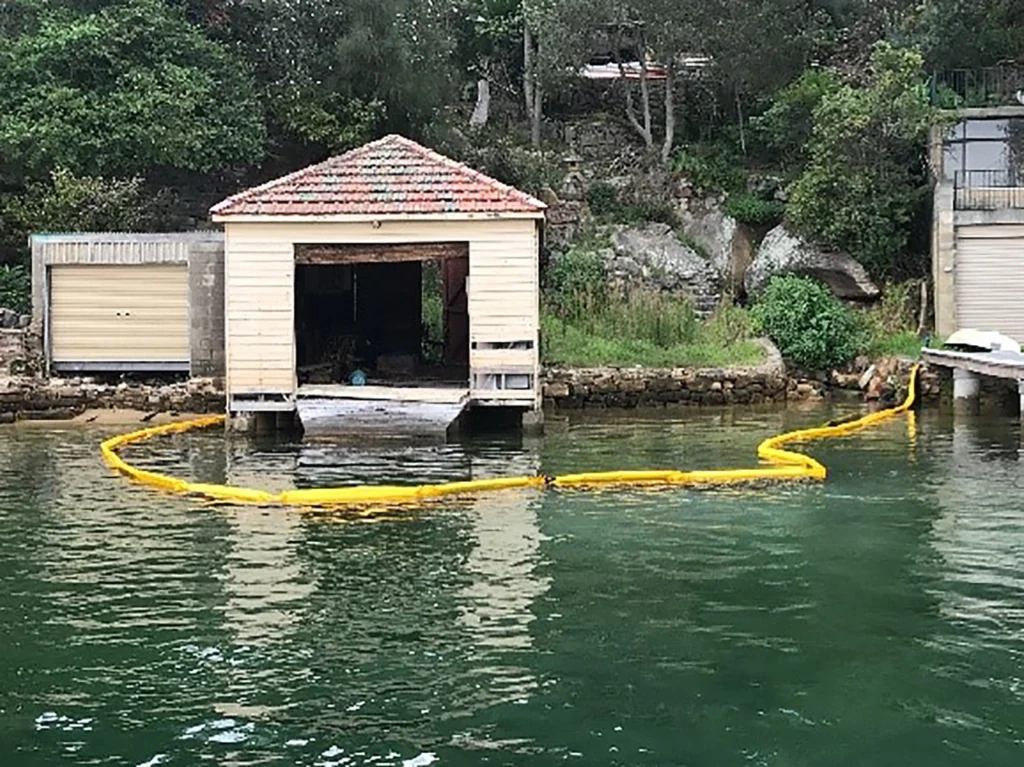
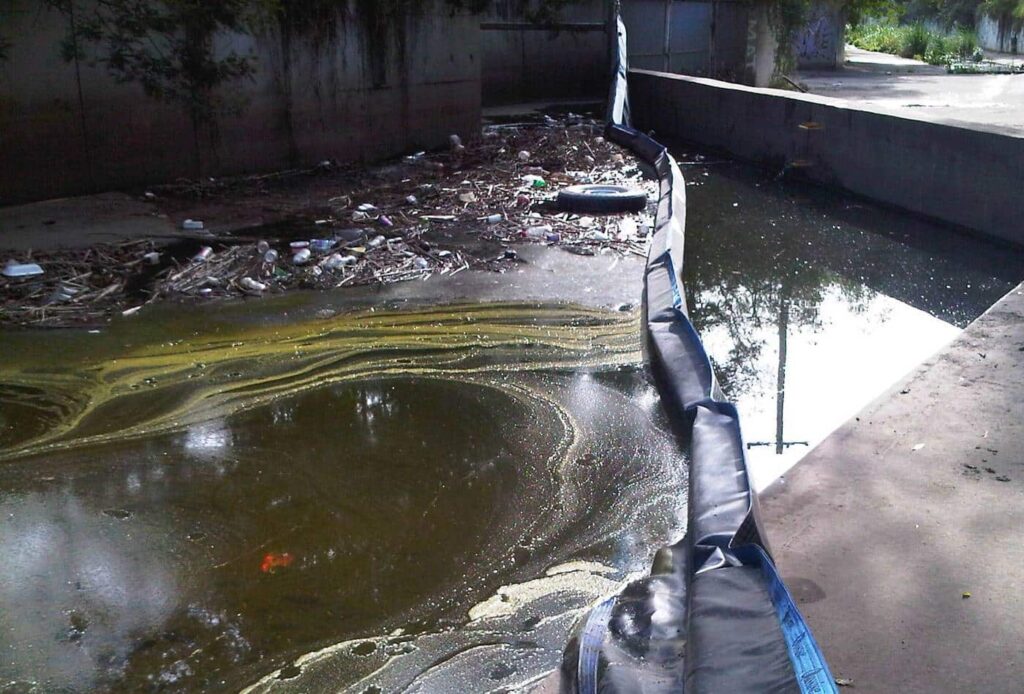
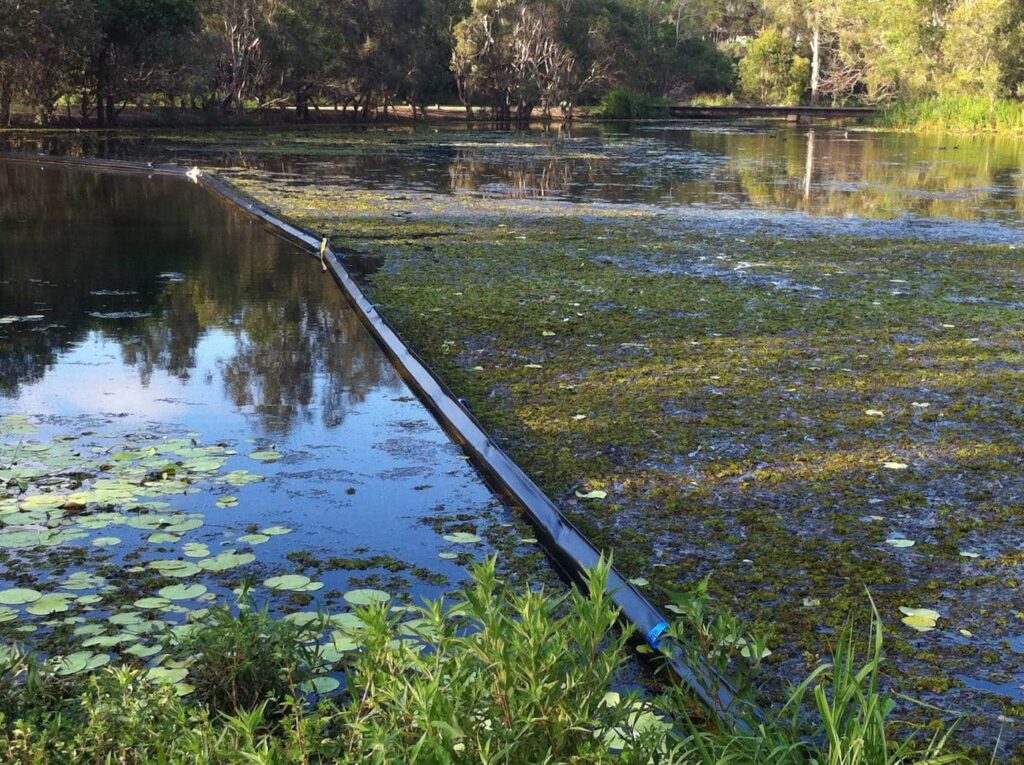
Floating debris and weed booms are designed to contain and control surface movement in waterways. When strategically deployed, they act as physical barriers that help limit the spread of floating blue-green algae mats.
By isolating affected areas, these booms support targeted treatment, protect intake points and reduce cross contamination within larger water bodies.
They are an effective preventative tool within a broader water quality management strategy.
Key Features and Performance Benefits
Akuna’s floating debris and weed booms are engineered for durability, reliability and long term deployment in demanding environments.
Durable construction
Manufactured from heavy duty, UV stabilised materials to withstand prolonged sun exposure and harsh Australian conditions.
High buoyancy design
Provides consistent flotation and effective surface containment of algae, weeds and floating debris.
Easy deployment and retrieval
Lightweight sections allow for rapid installation, repositioning and removal as conditions change.
Modular configuration
Available in various lengths and connection systems to suit different site requirements.
Long term performance
Designed for ongoing use in lakes, reservoirs and managed waterways with minimal maintenance requirements.
Where Floating Booms Make a Difference
Floating debris and weed booms are suitable for a wide range of inland water management applications:
- Drinking water reservoirs
- Municipal lakes and recreational water bodies
- Stormwater retention basins
- Irrigation storage dams
- Environmental protection zones
- Around water intake structures
By segmenting sections of water, these systems help authorities manage algae concentration and protect critical infrastructure.
A Proactive Approach to Waterway Protection
Blue-green algae prevention requires a combination of monitoring, nutrient management and physical containment strategies. Floating debris and weed booms provide a practical, scalable solution that supports environmental compliance and public safety.
For councils and water authorities seeking to reduce algae related risks, early intervention is key.
Looking to strengthen your algae management strategy? Contact our team today to discuss your site requirements.