
Resource Hub
Concrete washout on site: what councils require

Categories
Share
Quick answer
Australian councils require concrete washout to be captured in a contained, impervious facility that cannot discharge to a gutter, stormwater pit, drainage line or waterway. They also expect that facility to be marked on your erosion and sediment control plan. In practice that means a purpose built structure on site, whether a lined pit, a servicing bin, concrete washout bags or a collapsible washout bund, sited away from and downslope of drains, signposted, and emptied by a licensed waste contractor once the solids have cured.
The wording differs between states. The substance does not. What varies is the evidence the officer or auditor expects on the day.
Why concrete washout is a compliance issue
Concrete wash water is not dirty water. It is a caustic slurry carrying cement fines, admixtures and fine aggregate.
- pH sits at around 12. Transport for NSW puts the figure at approximately pH 12 in guideline EMF-EM-GD-0145. Freshwater ecosystems generally need pH 6.5 to 9, and pH is logarithmic, so a release sits well outside the band.
- It is visible. A grey plume in a kerb or a white crust on a pit lid is the easiest thing on site for a neighbour to photograph.
- It is a worker hazard. Wet concrete causes alkaline burns and dermatitis, so WHS Regulations 2011 duties on PPE and eye wash access apply here.
What councils and state regulators require

No Australian jurisdiction has a standalone washout regulation. The requirement is assembled from three layers.
| Layer | Instrument | Requirement |
|---|---|---|
| NSW statute | Protection of the Environment Operations Act 1997, ss 120 and 142A | Offence to pollute waters or land, including placing material where it can wash into waters. |
| QLD and VIC statutes | Environmental Protection Act 1994; Environment Protection Act 2017 | Concrete slurry is a prescribed water contaminant, and the Victorian general environmental duty applies. |
| Project guidance | Transport for NSW guideline EMF-EM-GD-0145 | Capture in an impervious bunded area, away from and downslope of drains and water bodies, signposted, crew briefed at induction. |
| Council layer | Consent conditions, the approved ESCP, and the Blue Book (Landcom, 4th edition 2004) | Location, facility type and servicing arrangement must be on the plan and on the ground. |
Where washout is allowed to happen on site
Washout is allowed in one place: the designated facility. Peg it inside the sediment controlled zone behind the silt fence, away from and downslope of drainage lines, pits and water bodies, on level firm ground cleared of rock and reo offcuts, within chute reach and reachable by a vacuum truck. The Transport for NSW guideline sets no setback in metres. Some consent conditions do, so read yours first.
Concrete washout bunds and washout bags compared
| Facility | How it works | Capacity | Suited to |
|---|---|---|---|
| Lined pit | Cut, batter, line and bund; liner replaced each use | Scaled to the cut | Long civil works with plant |
| Hook lift bin | Watertight bin exchanged by a contractor | Set by supplier | Several trucks a day, no room to dig |
| Washout bags | Lined woven bag, lifted out whole, single use | Small, one pour | Chute rinse on tight sites |
| Collapsible bund | Folding wall, lock in liner, frame folds flat | 189, 529 or 681 L | An auditable structure day one |
Where concrete washout bags fit
Concrete washout bags earn their place where you cannot excavate, cannot get a bin in, and need the lot lifted out in one movement. Their limits are modest volume, single use, and a seam that fails if the bag is overfilled or dragged. Akuna supplies the concrete washout bund instead: a slotted edge locks the liner in place, giving a repeatable structure with a stated capacity you can put on a plan. The economy models are 0.75 m, 1.2 m and 1.5 m square, each with a 350 mm wall and a 6 mil polyethylene liner.
Sizing a washout facility for your pour
Size for the peak day, not the average, and always deduct freeboard.
Check the rating against the geometry. A 1.2 m by 1.2 m bund with a 350 mm wall gives 1.2 x 1.2 x 0.35 = 0.504 m3, or 504 litres, against a rating of 529 L. The rating is measured to the top of the wall, so usable volume is what is left after freeboard.
Deduct freeboard, then divide by demand. Take the 1.5 m unit at 681 L with 25 per cent freeboard:
Worked example
- 681 x 0.75 = 511 litres usable
- At a confirmed chute rinse of 100 L per agitator, 511 / 100 = 5 truck rinses before servicing
Add the rain. An open 1.5 m square bund is 2.25 m2 of catchment, so 50 mm overnight adds 2.25 x 0.05 = 0.1125 m3, or 113 litres, a quarter of the usable volume gone before a truck arrives.
Setting up the washout area
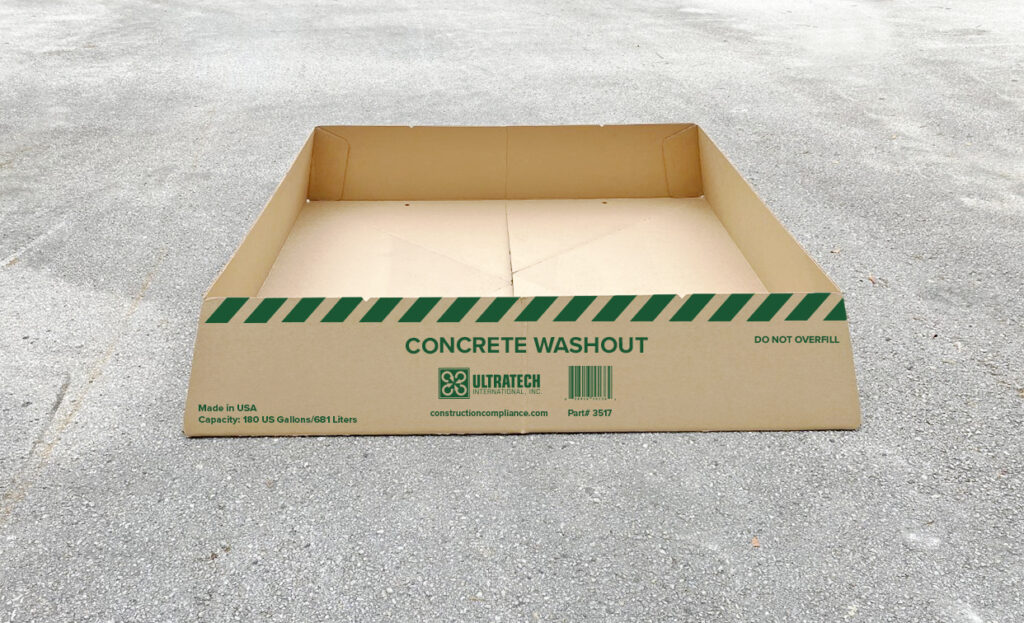
- Peg the location on the erosion and sediment control plan before mobilisation, not after the concrete is booked.
- Level and compact the pad, clearing anything that will puncture the liner.
- Lock the liner into the slotted edge so it cannot lift under load.
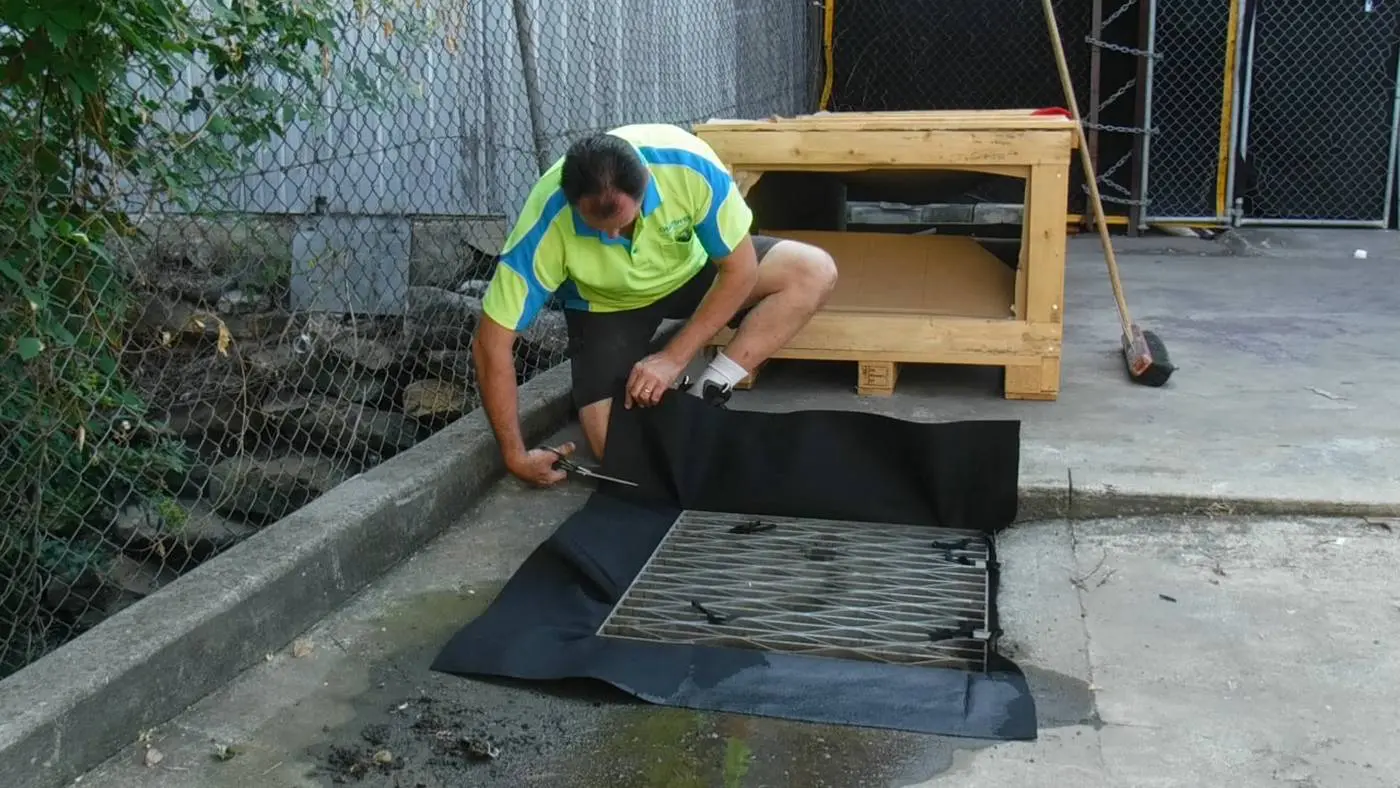
- Protect the downstream pit as a second barrier Drain Covers and mark the truck standing position.
- Fit signage, then photograph the setup with a date.
Signage, access and keeping the crew using it
The facility only works if it is more convenient than the gutter, which is a layout problem rather than a product one.
- Sign it in line with AS 1319-1994: concrete washout only.
- Name the location at induction and pre-start, and tell the supplier and pump operator when you book the pour, not when the truck is at the kerb.
- Reset the message when the crew turns over, using Akuna’s 30 minute toolbox talk on the 7 Step Spill Response Guide Toolbox Talk.
Managing the water and the alkaline runoff
The solids are the easy part. The alkaline water causes the notice.
- Never discharge to stormwater. There is no acceptable volume in a pit.
- Never discharge to sewer without a trade waste agreement, which will carry pH limits.
- Evaporate, reuse or remove. Returning wash water to the batching plant is cleanest where the plant accepts it, otherwise it leaves by vacuum truck.
- Neutralise only where authorised, recording pH before and after.
- Keep the rain out with a lid or tarp, protecting freeboard between pours.
Curing, breaking out and disposing of the waste
- Let the solids cure, then break out the hardened concrete and separate it from the liner.
- Clean cured concrete can usually go to a recycler as crushed aggregate, subject to acceptance criteria.
- Classify the residue, liner and slurry against your state waste classification guidelines, dispose through a licensed facility and keep the dockets.
- Never bury washout waste on site. It is the most common finding of the lot.
- Issue gloves, eye protection and boots, and confirm eye wash access Eye Wash and Safety Shower Inspection.
Recording washout in your erosion and sediment control plan
An auditor tests whether the control exists on paper, exists on site and is maintained:
- Location marked on the plan drawing, with catchment direction and rated capacity in litres.
- Servicing trigger as a percentage full, the licensed contractor’s name, the responsible person and the inspection frequency, weekly at minimum and after rainfall.
- Protection installed on the downstream pit Stormwater Management.
- Evidence pack: dated photographs, inspection records and waste dockets.
A plan that names a control which is not on the ground becomes the evidence against you.
Washout mistakes that draw a council notice
- Rinsing the chute onto the ground beside the facility because the truck could not reach.
- Washing pump lines, screeds and barrows anywhere else.
- Overfilling past the wall, leaving no freeboard for rain.
- A punctured liner noticed only when a crust appears outside the bund.
- A washout facility that never made it onto the plan.
Washout bunds and sediment control shipped Australia wide
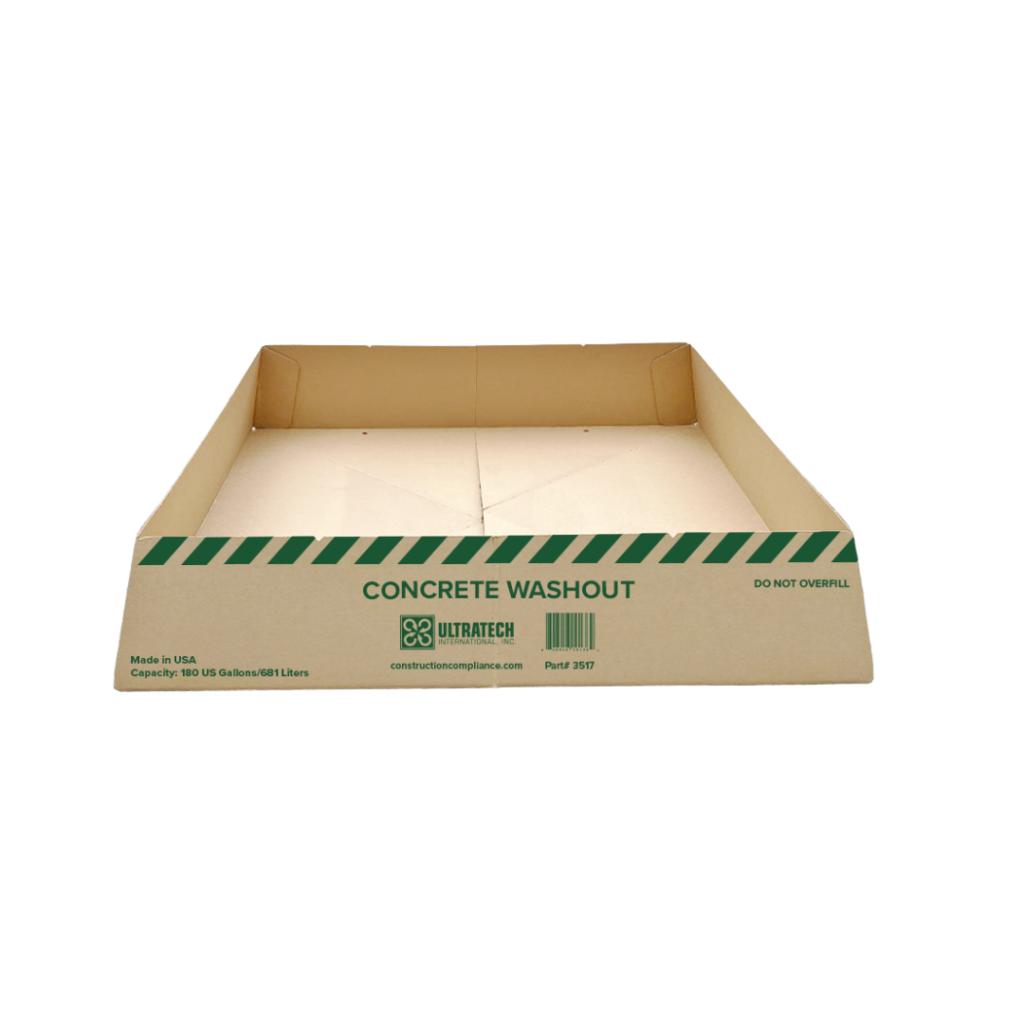
Akuna Services is 100 per cent Australian owned and operated, founded in 2016, based at 349B Wentworth Avenue, Pendle Hill NSW 2145 and servicing sites nationwide, with same day dispatch on orders placed before 11 am. The range covers washout bunds and the controls around them: silt curtains, silt socks and dewatering bags, plus drain covers, seals, gutter guards and pipe socks. Brands include Chatoyer, SpilMax, DrainSAFE, Ecocoast, Ultratech and Accumax Global.
Frequently asked questions
Can I wash out into a hole in the ground on site?
No. An unlined excavation is not an impervious facility. The Transport for NSW guideline requires capture in an impervious bunded area, which means a liner and a wall, not soil.
Do I need a washout facility for a single small pour?
If concrete, grout or render is mixed, placed or rinsed on site, the rinse water must be contained. For one small pour that is often a washout bag or the smallest bund at 189 L.
What pH is concrete washout water, and does it need neutralising?
Typically around pH 12. Whether you neutralise depends on your consent or licence. Where treatment and discharge are not authorised, it leaves site with a licensed contractor.
How full can the facility get before it must be emptied?
Service it at around three quarters full, and allow for forecast rainfall. An open 1.5 m square bund gains roughly 113 litres from a 50 mm event.
Booking a pour and want the containment sorted first? Browse the Concrete Washout Bunds for sizing, pair it with Drain Covers on the downstream pit, and call 1300 912 949 to have the setup checked against your erosion and sediment control plan.