
Drain Covers
Showing the single result
-
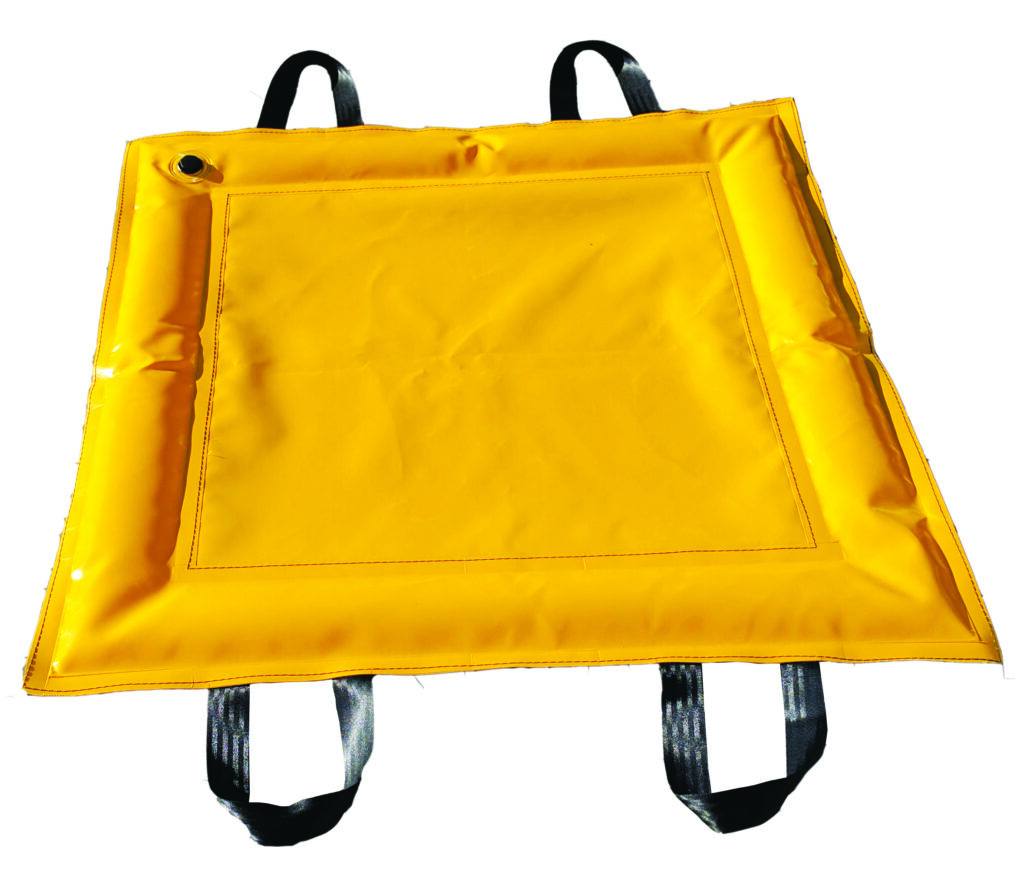
Weighted Drain Cover
Price range: $500.50 through $638.00 (inc. GST)
Extra Information
Drain Covers
Weighted Drain Covers for Rapid Spill Containment
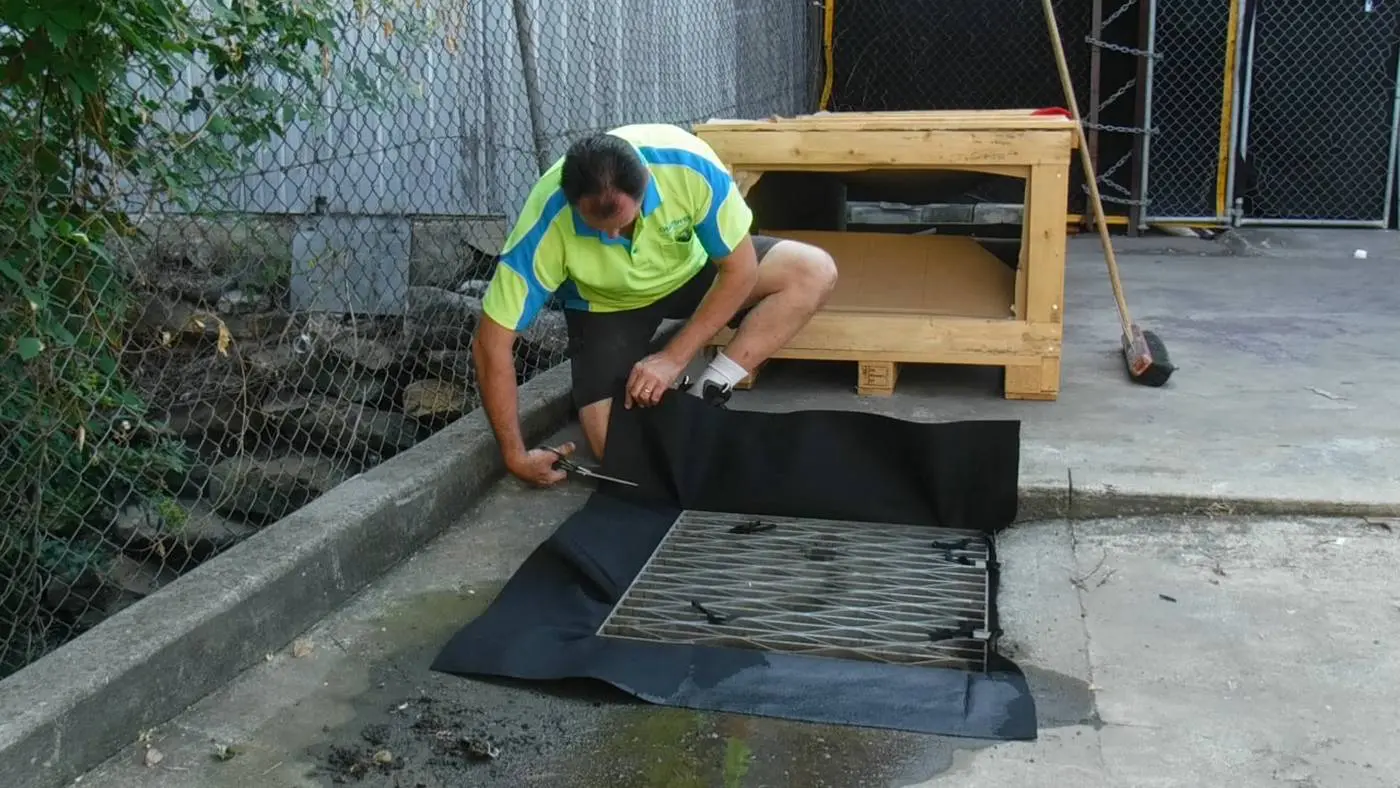
A drain cover is a flexible, weighted mat laid over a stormwater pit or grate to seal it shut so a spilled liquid cannot enter the drainage network. One person lays it over the pit, the weighted perimeter seals it to the surface, and the spill stays on the hardstand.
Akuna Services supplies weighted drain covers to industrial, civil, mining, transport, utilities and government sites. We are 100 per cent Australian owned and operated, founded in 2016, with same day dispatch before 11 am, Australia wide.
One person
Lays it over the pit
No tools
No anchors, adhesive or tools
11 am
Order cut off for same day dispatch
100%
Australian owned and operated
On this page
- 01What a Spill Drain Cover Does and How It Differs from a Grate
- 02Our Range of Weighted and Polyurethane Drain Covers
- 03Drain Cover Sizes for Grated Pits and Open Drains
- 04Drain Covers, Drain Seals and Drain Guards Compared
- 05Drain Covers for Depots, Loading Docks and Wash Bays
- 06Where to Position Drain Covers Across Your Site
- 07A Fast Seal That Stops a Spill Reaching the Waterway
- 08Reusable Covers That Pay for Themselves Over Time
- 09Backing Up Your Spill Response Plan at Audit Time
- 10Deploying and Storing Your Drain Covers Correctly
- 11FAQs
What a Spill Drain Cover Does and How It Differs from a Grate
In Australia, “drain cover” usually means the permanent cast iron or galvanised grate set into a pit and designed to let water through. That is civil drainage hardware, not this product.
A spill containment drain cover does the opposite job: a temporary, removable seal laid over that grate to stop flow, deployed for decanting, refuelling or a live spill and lifted once the surface is recovered.
An auditor will not accept a fixed grate as a spill control, because a grate is an inlet. They want a documented, maintained device that closes it, stored close enough to beat the spill.
Our Range of Weighted and Polyurethane Drain Covers
Akuna stocks the Weighted Drain Cover in multiple variants, so you can match the cover to the pit rather than buying one size and hoping it fits. A chemically resistant polyurethane face is bonded to a weighted perimeter, so the cover conforms to cracked or uneven hardstand instead of bridging it and leaking at the edge. There are no anchors, adhesive or tools, so one person can deploy it.
- Chemical resistance. Polyurethane handles the oils, fuels, coolants and detergents on a depot floor.
- Reusable. Wiped down, dried and returned to service, not binned after one spill.
Pipe outlets suit a drain seal or pipe sock, and permanent filtration suits DrainSafe or Drain Warden.
Drain Cover Sizes for Grated Pits and Open Drains
Sizing a drain cover is a measuring job, not a guessing job.
- 1Measure the opening. Record the clear opening in millimetres, not the frame. For an open drain, take the channel width and run length.
- 2Add overlap. A 600 by 600 mm opening needs a cover that laps well past it on every side, so the perimeter seals on concrete, not the lip.
- 3Check the landing zone. A kerb, bolt head, step or cracked apron in the overlap area is where a marginal seal fails.
Drain Covers, Drain Seals and Drain Guards Compared
All three protect stormwater, but they are not interchangeable, and most sites hold all three.
| Drain Covers | Drain Seals | Drain Guards | |
|---|---|---|---|
| Action | Blocks | Blocks | Filters |
| Treats | Top of a grated pit | A defined drain or pipe opening | Whatever passes the inlet |
| Left in place | Risk window only | Risk window only | Yes, until serviced |
A cover or a seal is a stop, a guard is a filter, and a stop is what you want once the liquid is down.
RelatedDrain Seals →
Drain Covers for Depots, Loading Docks and Wash Bays
Drain covers earn their place wherever liquid is transferred over a hard surface that drains to stormwater.
- Transport depots. Refuelling points, oil and AdBlue decanting, and any pit below the fuel island.
- Loading docks. Chemical and fuel deliveries, forklift work around drums and IBCs, and a punctured container on the apron.
- Wash bays and workshops. A compromised bund, wash water reaching stormwater rather than trade waste, hose failures.
Bunding handles the stored volume: AS 1940-2017 sets compound bunding at 110 per cent of the largest container, so a 205 L drum needs 225.5 L and a 1,000 L IBC needs 1,100 L. The gap is the transfer, when the drum leaves the bund and the nearest pit is metres away.
Where to Position Drain Covers Across Your Site
A drain cover stored three buildings away is not a control, it is stock. Position covers by travel time: if nobody can get one onto the pit in a minute, the spill wins.
- 1Map the flow path. Mark every stormwater inlet and the way the surface falls, then identify the pits below each liquid handling area.
- 2Rank the pits. A pit a few metres from a refuelling point is first priority. One at the far end of the yard is not.
- 3Station the cover at the risk. Mount it beside the task with the matching spill kit, and record the location on the spill response plan.
Our environmental risk assessment documents this walkthrough for you. Onsite services are primarily New South Wales, with limited coverage into Queensland and Victoria through partners.
A Fast Seal That Stops a Spill Reaching the Waterway
Once a hydrocarbon or chemical enters a stormwater line it is effectively gone. The pipe leads to a creek or the harbour, and recovery shifts from a bucket of absorbent to booms, contractors and a notifiable incident.
A weighted cover seals on contact. Nothing to bolt, tension or inflate, so deployment is the same at 2 am in the rain as on a planned delivery. Once the pit is closed, the spill is a surface problem: contain it, absorb it with our absorbents and bag the waste.
We all share the responsibility for clean Australian waterways, and it is easiest to meet in the first minute.
Reusable Covers That Pay for Themselves Over Time
Drain covers are a capital item, not a consumable. One cover is wiped down and re-hung after every event, where one uncontained release brings vacuum truck hire, contractor attendance, disposal and sampling.
Reusability also makes a cover worth deploying for planned work, not just emergencies, because crews will use what is free to deploy. Polyurethane holds its flexibility through Australian temperature swings, so the cover still conforms after a summer on a depot wall.
Backing Up Your Spill Response Plan at Audit Time
Buying the cover is half the task. The rest is showing an auditor what you bought, where it is and when it was last checked. Sites working to ISO 14001 must demonstrate operational control over environmental aspects, with the WHS Regulations 2011, AS 1940-2017 and AS 3780 alongside.
- The plan and register. A spill response plan naming the covers and the deployment trigger, and the same covers on the equipment register with inspection dates.
- The training record. Our spill response training is a 60 to 90 minute practical workshop aimed at ISO 14001 compliance requirements, at Sydney metro locations, weekdays.
- The maintenance evidence. Inspection records, which our spill kit servicing and maintenance program manages site wide.
ISO 14001 is the standard your organisation meets, and our training and servicing help you meet it.
Deploying and Storing Your Drain Covers Correctly
Deployment is simple. The discipline is in the habits around it.
- 1Make the area safe. PPE on, ignition sources controlled, traffic stopped. Approach from upstream, never through a flowing spill.
- 2Clear the landing zone. Sweep grit and leaves off the concrete where the perimeter will sit. Debris under the edge is the commonest cause of a weak seal.
- 3Lay it flat and centred. Cover the full opening, press the perimeter down and check the edge all round.
- 4Clean and return it. Wipe the face, dry it fully, inspect it and store it flat in its labelled position, never wet.
Keep covers out of sunlight and on the same inspection cycle as your spill kits. For installation and inspection handled for you, see our stormwater product installation and maintenance service or call 1300 912 949.
FAQs
What is the difference between a drain cover and a drain seal?
A drain cover is a weighted mat that lies over a grated pit and seals it under its own weight. A drain seal seals a defined drain or pipe opening, including outlets and smaller inlets. Both block flow rather than filter it, so most sites hold both.
How do I know what size drain cover I need?
Measure the clear opening in millimetres, then choose a variant that laps well past it on all four sides, so the perimeter seals against flat concrete rather than the grate frame. Send the dimensions and a photo and we will confirm the fit.
Can a drain cover be left in place permanently?
No. A cover is deployed for a spill or a high risk task such as decanting, then lifted once the area is clear. Leaving one down blocks legitimate stormwater flow and risks localised flooding. For ongoing control, use a drain guard.
Will drain covers help us satisfy an environmental audit?
They help, provided they are documented. An auditor looks for a control named in your spill response plan, listed on your register, positioned close to the risk and understood on the floor. Training and inspection records make it defensible.
Want to book a spill training session?
Get in touch with our expert team and we will guide you through the process.