
Resource Hub
Oil versus chemical versus general purpose absorbents
Categories
Share
Quick answer
Absorbent pads come in three types: oil only pads repel water and absorb hydrocarbons, chemical pads are inert and rated for aggressive acids and caustics, and general purpose pads take almost any liquid. Choose by the liquid first, then by the environment: oil only wherever water is present, chemical wherever the safety data sheet shows a corrosive or reactive product, and general purpose for mixed workshop and maintenance duty.
All three share the same base material, melt blown polypropylene. The treatment is what separates them, and it decides whether a pad works or sits uselessly on the spill.
What absorbent pads are used for
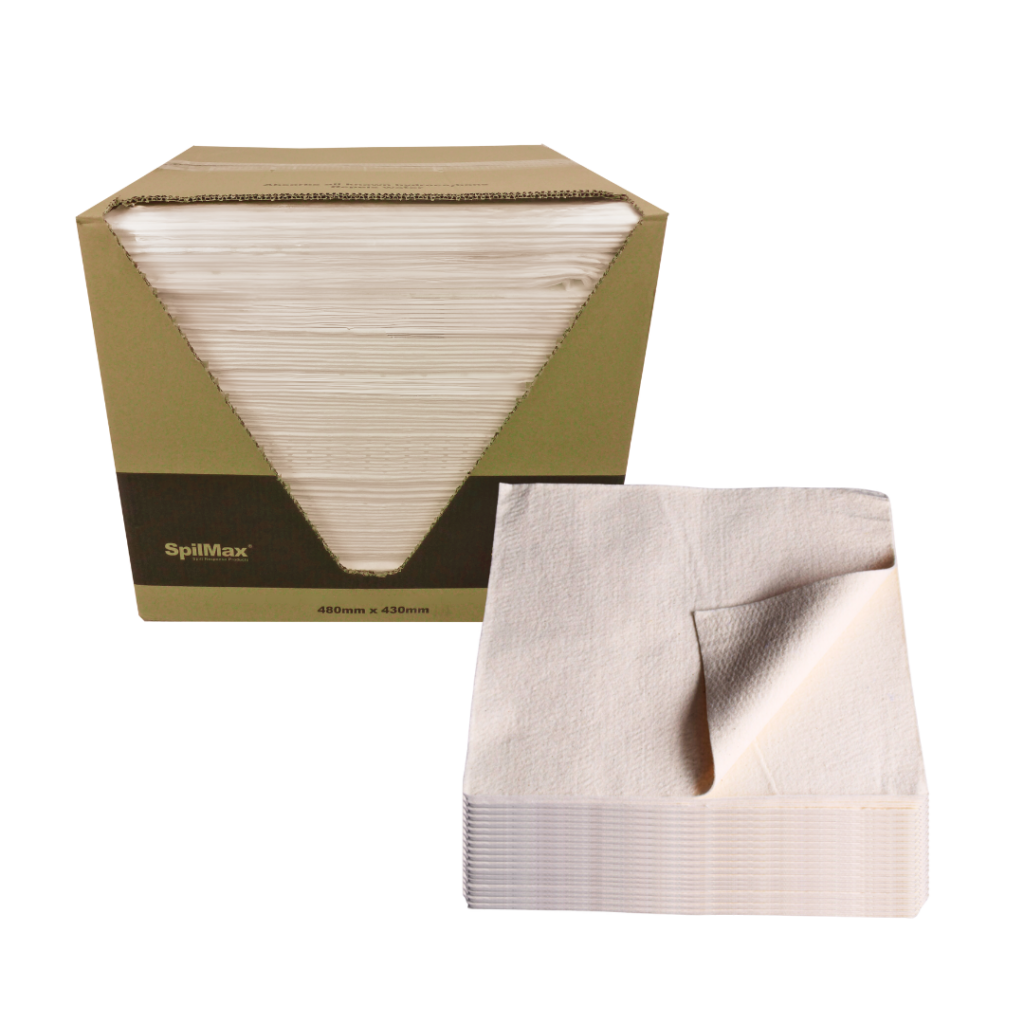
- Response: soaking up a spill once it is contained, as the last step before decontamination.
- Prevention: under a leaking pump, coupling or valve so a drip never becomes a report.
- Maintenance: wiping down oily surfaces, plant and tooling.
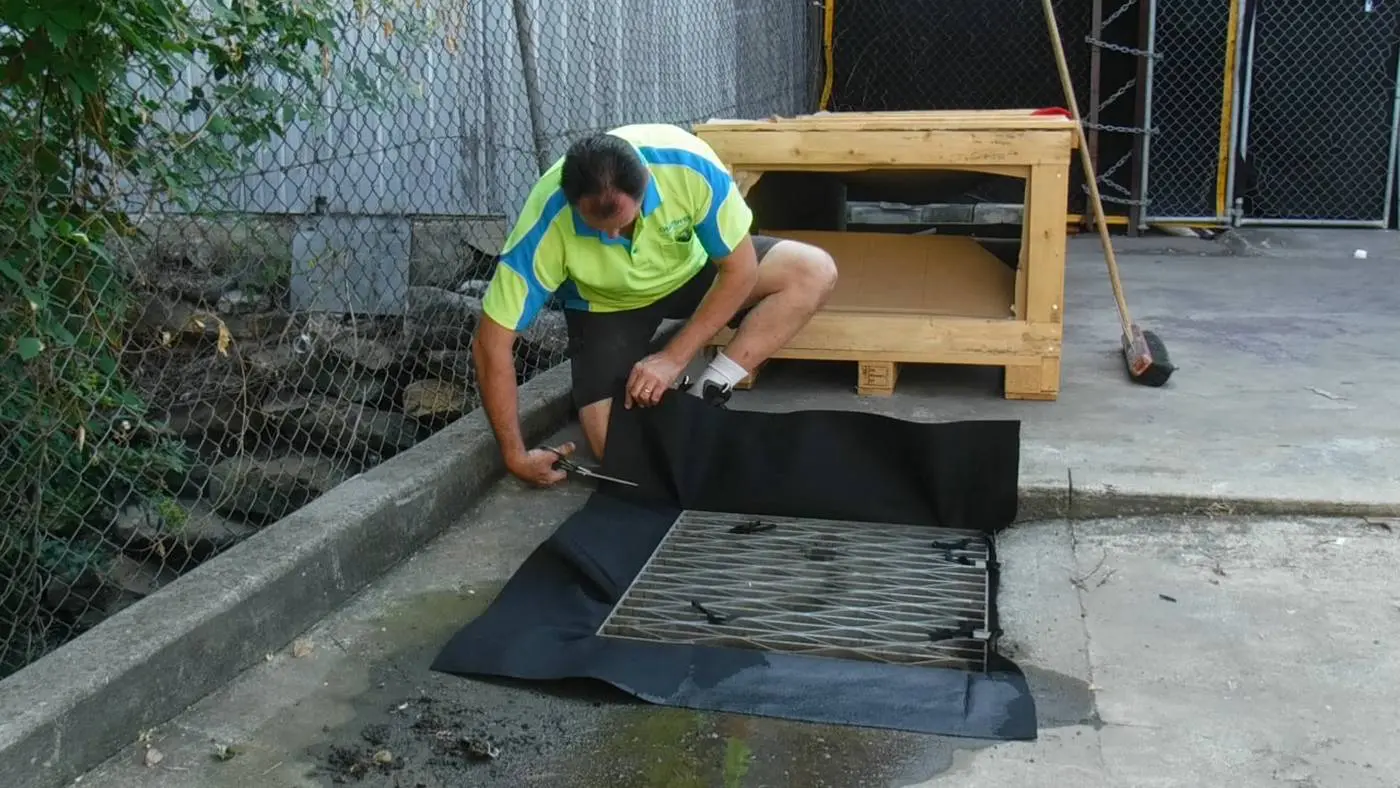
- Interception: at a drain or doorway as a temporary barrier alongside Drain Covers.
Pads are consumables and belong on the register with the kit that holds them, because an auditor will check whether the ones on the wall were replaced after the last event.
Oil only, chemical and general purpose, the real difference
- Oil only is hydrophobic. It repels water, floats when saturated and takes petroleum products, so it works in rain, in a bund holding rainwater and on open water.
- Chemical or hazchem is inert. It will not degrade or react with what it absorbs, which suits concentrated acids, caustics, solvents and unknown liquids.
- General purpose or universal wets out with water as well as oils, so it handles coolant, condensate, mild chemicals and hydrocarbons. It is the workshop default and the wrong choice on open water.
Some ranges merge the middle two. SpilMax UniChem is rated as both universal and chemical, which cuts lines on a site register.
The colour coding convention and why it matters
The common Australian convention is:
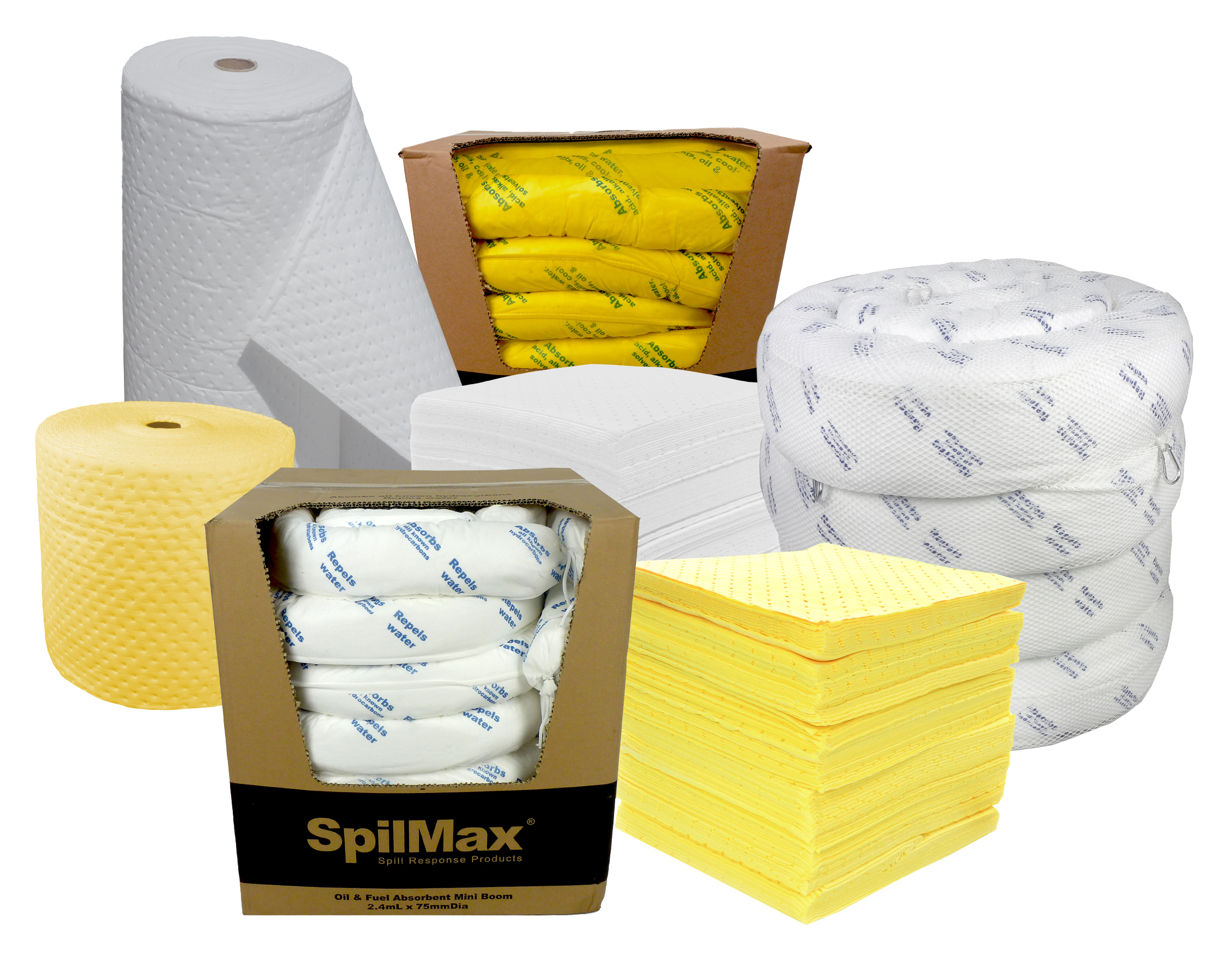
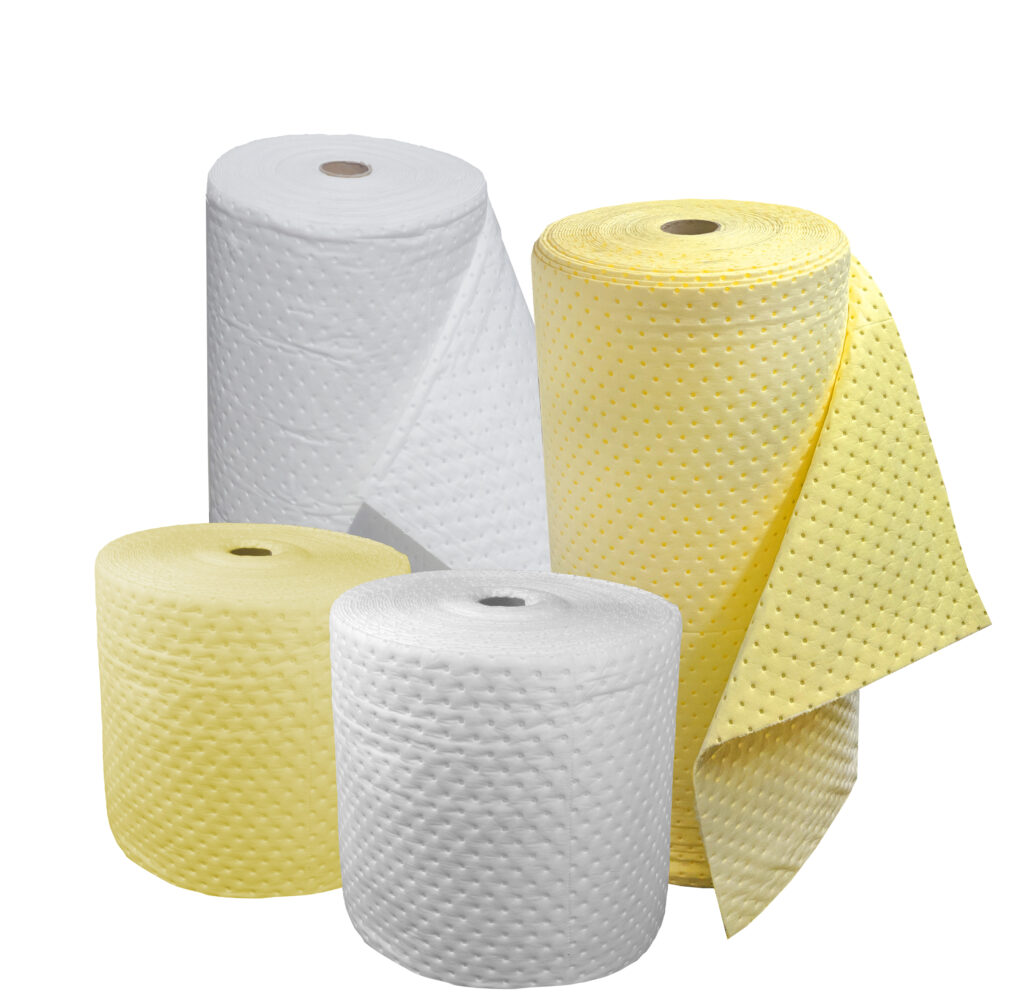
- White for oil only
- Yellow for chemical or hazchem, though some suppliers use pink and a few use green
- Grey for general purpose or universal, with blue used by some brands
No Australian Standard mandates these colours. They are an industry habit, not a rule, and they vary between suppliers. Colour is a useful prompt at three metres, but it is not evidence. Identify absorbents by their printed labelling, keep signage consistent with AS 1319-1994, and never let a crew assume the white pads in a chemical store are the right ones.
Absorbency, dimensions and pack quantities
The Australian standard pad footprint is close to 480 mm by 430 mm, in three weights:
| Weight | Duty | Typical pack | Indicative absorbency |
|---|---|---|---|
| 100 gsm | Light, wipe down | Boxes of 200 | Lowest, best for drips |
| 200 gsm | Standard response | Boxes of 200 | Around 0.7 L per pad |
| 400 gsm | Heavy duty | Boxes of 100 | Around 1.4 L per pad, 136 L per box |
Treat those litre figures as indicative and buy against the datasheet, because absorbency depends on the liquid and its viscosity. Suppliers publish results tested to ASTM F726, the sorbent performance test method, so compare like with like. Dimpled, scrim reinforced pads hold together wet, which matters when a saturated pad is lifted by hand.
Choosing by the liquid you are absorbing
| Liquid on site | Use | Why |
|---|---|---|
| Diesel, petrol, engine and hydraulic oil | Oil only | Hydrophobic, so rain and standing water do not consume capacity |
| Coolant, glycol, condensate | General purpose | Water miscible, which oil only will not take |
| Battery acid, sodium hydroxide, concentrated acids | Chemical | Inert, will not react with the spill |
| Solvents, or any unknown liquid | Chemical | Aggressive on treated absorbents, and the safest default |
| Paint, adhesives, drilling fluid | General purpose or chemical | Check the SDS first |
| Oil on water, bilge or harbour | Oil only | Floats and repels water |
Work from the safety data sheet, not the drum label. Classification also drives storage obligations under AS 1940-2017 for flammable and combustible liquids, AS 3780 for corrosives, AS 4326-1995 for oxidising agents and AS 2507 for agvet chemicals.
Pads, rolls, socks, pillows and booms
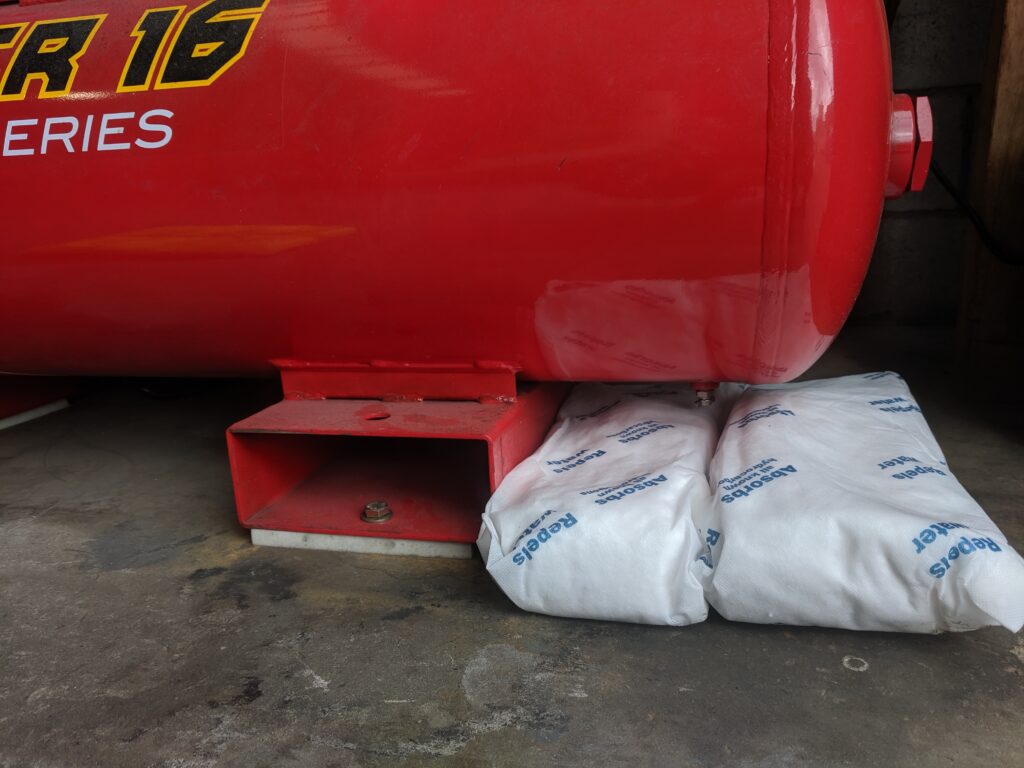
| Format | Job | Notes |
|---|---|---|
| Pads | Absorb residue, wipe down | The workhorse of every kit |
| Rolls | Cut to length for benches and plant | Perforated, so waste is minimised |
| Socks | Surround the spill before it spreads | Deploy first, always |
| Pillows | Under a persistent drip or in a sump | High volume, small footprint |
| Booms | Contain on open water | Pair with Containment Booms |
Sequence matters more than product choice: contain with socks, then absorb with pads. Reverse that order and you waste stock while the spill finds a drain.
Hydrophobic pads for water and marine use
Oil only pads float and keep absorbing hydrocarbons while water passes beneath them, which makes them the only sensible choice for:
- Bunds and spill decks holding rainwater alongside product.
- Wash bays and areas that are hosed down.
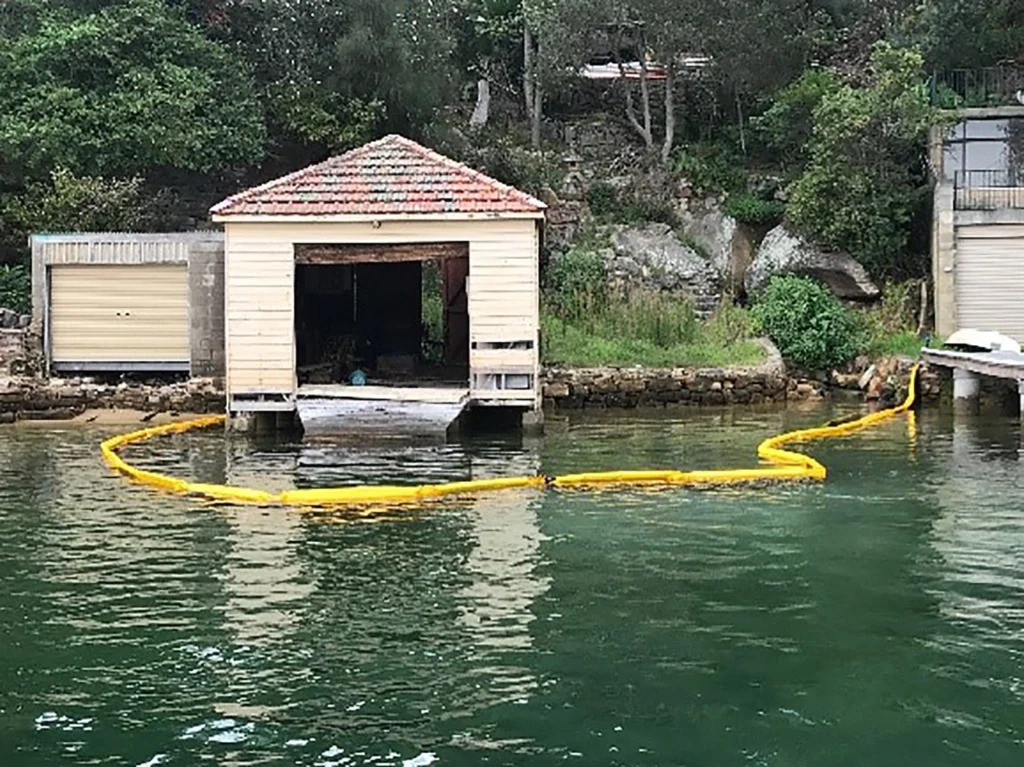
- Wharves, pontoons, bilges and any marine deployment Marine Spill Kits.
- Outdoor plant yards in the wet season, where a universal pad fills with rainwater and stops working.
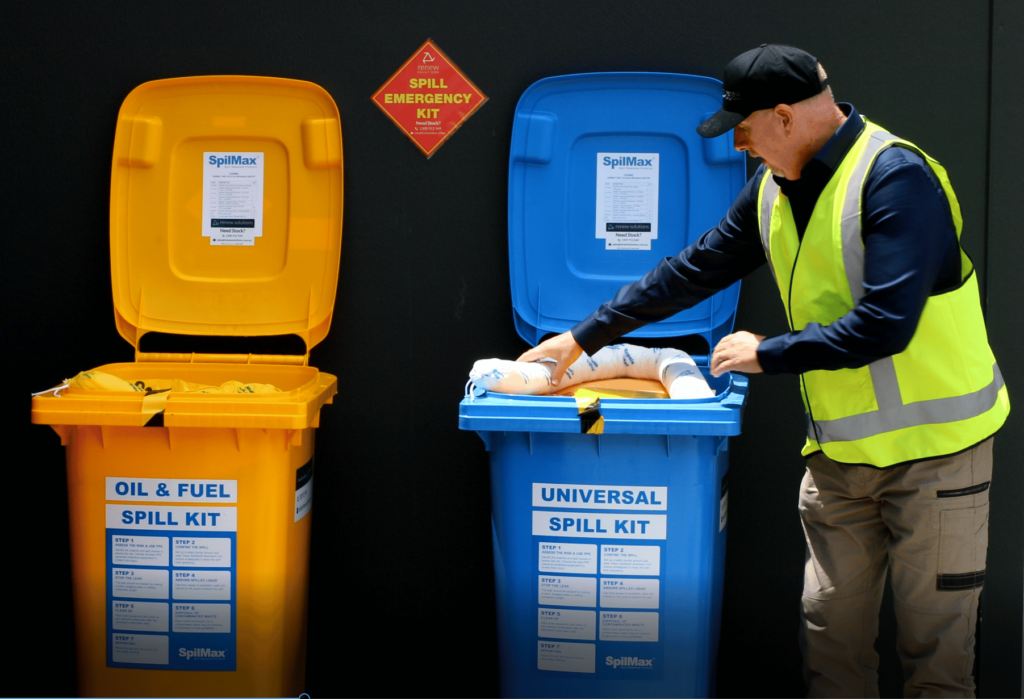
Using pads inside a spill kit
Absorbents are the last line, not the first. Containment comes first, and the arithmetic makes the point.
Bunding first. Under AS 1940:2017 clause 4.4.3(d) a packaged spill compound holds 100 per cent of the largest package plus 25 per cent of the first 10,000 litres stored. The 110 per cent figure quoted across this industry is state EPA guidance, not an AS 1940 requirement. For twenty 205 L drums:
Worked example
- Aggregate: 20 x 205 = 4,100 L, and 25 per cent of that is 1,025 L
- Largest single container: 205 x 1.1 = 225.5 L
- The bund is designed to the greater figure, 1,025 L Spill Containment on Land
Absorbents second. If that drum failed onto open hardstand with no bund, at roughly 1.4 L per 400 gsm pad you would need 205 / 1.4 = 147 pads to recover it. No wall mounted kit carries that. Size the kit for the credible spill and let containment handle volume.
Storage, handling and shelf life
- Polypropylene absorbents have no shelf life in the usual sense, but ultraviolet light makes them brittle, so store them out of direct sun.
- Keep them dry. A universal pad that has taken up humidity or rain has already spent part of its capacity.
- Store them sealed in the kit rather than loose on a shelf, so the count is auditable.
- Restock immediately after use and record it. A kit with a broken seal is treated as a kit with unknown contents.
- Akuna’s Spill Kit Servicing and Maintenance covers supply, auditing and management across a whole site.
Disposal of used absorbents
A used absorbent carries the classification of what it absorbed.
- Identify the absorbed liquid from the SDS.
- Classify the waste under your state waste classification guidelines. Hydrocarbon soaked pads are commonly a regulated waste.
- Bag and label at the point of use, not at the end of the shift.
- Dispose through a licensed waste contractor and keep the docket with the incident record.
- Never wring out and reuse a pad that has taken a hazardous liquid, and never put used absorbents in general waste.
Comparison table: which absorbent for which spill
| Oil only | Chemical (hazchem) | General purpose (universal) | |
|---|---|---|---|
| Common Australian colour | White | Yellow, sometimes pink or green | Grey, sometimes blue |
| Base material | Melt blown polypropylene, hydrophobic | Melt blown polypropylene, chemically inert | Melt blown polypropylene, wets out with water |
| Takes | Petrol, diesel, engine and hydraulic oil, kerosene, lubricants, vegetable and animal oils | Acids, caustics, solvents, reactive and unknown liquids | Oils, fuels, coolant, water, mild workplace and agricultural chemicals |
| Will not take | Water, coolant, water miscible liquids | Check the compatibility chart | Aggressive acids and solvents |
| On water | Floats and keeps absorbing | Wets out, not for open water | Wets out, capacity lost |
| Typical pad | 480 x 430 mm, 100 to 400 gsm | 480 x 430 mm, 200 or 400 gsm | 480 x 430 mm, 100 to 400 gsm |
| Belongs in | Oil and fuel kits, marine kits, refuelling points, bunds | Chemical kits, dangerous goods stores, process areas | Universal kits, workshops, warehouses, vehicle kits |
| Disposal | Usually regulated waste, hydrocarbon contaminated | Classified by the absorbed chemical | Classified by the absorbed liquid |
Full absorbent range and datasheets
Akuna Services is 100 per cent Australian owned and operated, founded in 2016, based at 349B Wentworth Avenue, Pendle Hill NSW 2145 and servicing sites nationwide, with same day dispatch on orders placed before 11 am.
The range covers pads, rolls, socks, pillows, booms and wipes in oil and fuel, universal and UniChem grades, plus floor sweep, spill mats, PPE and kit extras, and complete kits in oil and fuel, chemical, universal and marine. Brands include Chatoyer, SpilMax, DrainSAFE, Ecocoast, Ultratech and Accumax Global. Where your team needs to demonstrate competence for ISO 14001 compliance requirements, the 60 to 90 minute practical workshop puts deployment in the hands of the people who will do it.
Frequently asked questions
Can I use general purpose pads on diesel?
Yes, universal pads absorb hydrocarbons. The problem is rain and standing water, which consume capacity oil only pads would leave for the fuel. Outdoors or in a wet bund, use oil only.
Is the colour coding an Australian Standard?
No. White for oil only, yellow or pink for chemical and grey for universal is convention, not a mandated code, and it varies between suppliers. Identify absorbents by their labelling.
How much does one absorbent pad hold?
Indicatively around 1.4 litres for a 400 gsm pad and about half that at 200 gsm, depending on the liquid. Compare datasheets tested to ASTM F726 rather than headline claims.
What do I do with used pads?
Classify by what was absorbed, bag and label at the point of use, then dispose through a licensed contractor and file the docket with the incident record.
Building or restocking a kit? Compare pads, rolls, socks, pillows and booms in the Absorbents, match them to the right kit in the Spill Kits, and call 1300 912 949 if you want the selection checked against the safety data sheets for the products on your site.