
Resource Hub
What soaks up oil

Categories
Share
Quick answer
Oil is soaked up by three families of absorbent: synthetic oil only polypropylene, natural organic material such as peat and coir, and natural inorganic mineral such as clay and vermiculite. Polypropylene is supplied as pads, rolls, socks, pillows and booms. On an Australian site holding hydrocarbons the best of the three is oil only polypropylene, because it holds the most per kilogram, takes up the hydrocarbon and repels the water.
What soaks up oil, the short answer
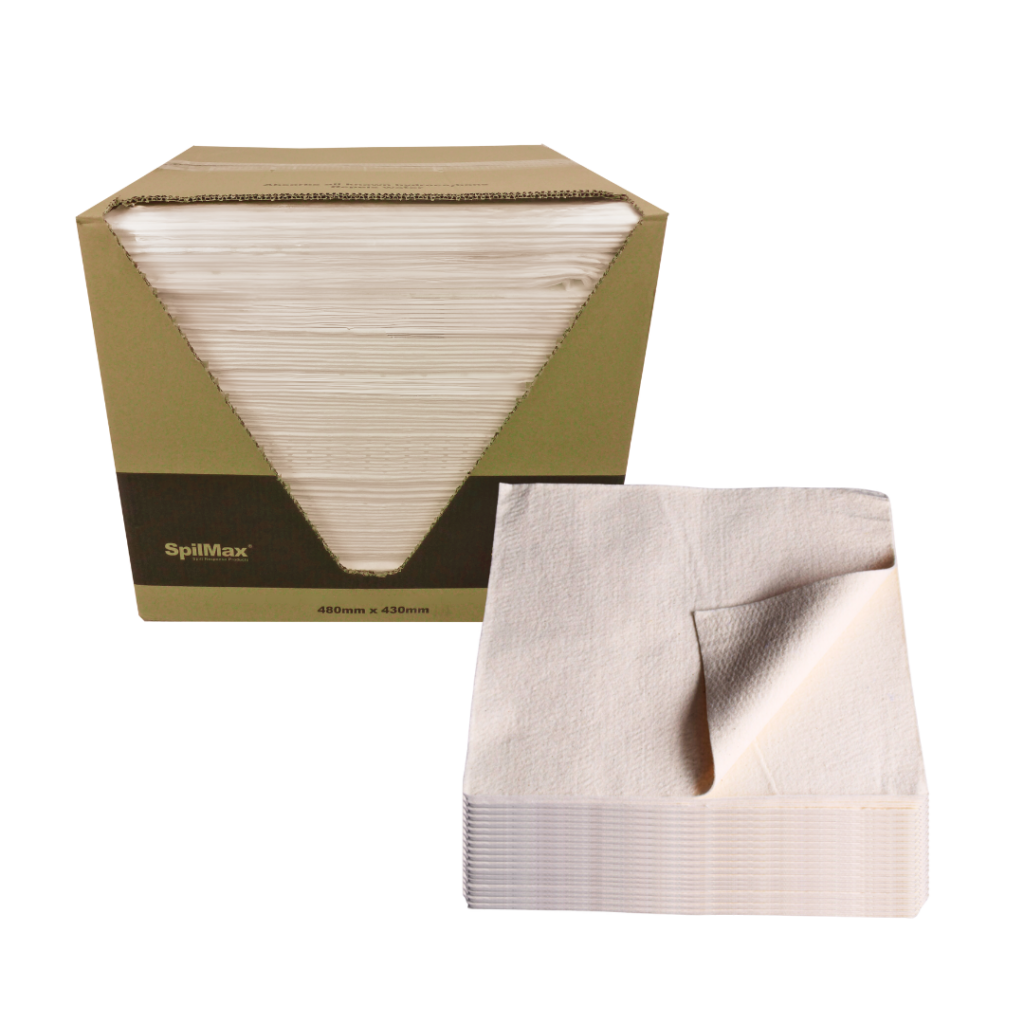
- Synthetic (oil only): meltblown polypropylene. Oleophilic and hydrophobic. Roughly 10 to 25 times its own weight, and floats when loaded.
- Natural organic: peat, coir, cellulose, corn cob, sawdust. Typically 3 to 15 times, and takes up water as readily as oil unless treated.
- Natural inorganic: clay, vermiculite, diatomaceous earth, floor sweep. Granular clay is typically 0.5 to 1.5 times, and it sinks.
The gap between 25 times and one time is the whole argument.
Synthetic oil only absorbents
Oil only product is white by industry convention, so the colour tells a responder at a glance it is for hydrocarbons and not for acids or unknowns. Molten polypropylene is blown into fine fibres, creating a capillary structure that draws oil in and holds it against gravity. Three properties matter on site:
- Selectivity. It takes up diesel, petrol, hydraulic and engine oil, kerosene and most fuels while shedding water, so it keeps working on a wet hardstand or a rain filled bund.
- Retention under load. A saturated pad lifted from a puddle should not stream oil back out. Specify dimpled or bonded pads where product will be walked on.
- Wringability. Heavier pillow and boom grades can often be wrung and redeployed, sending recovered oil to your waste oil stream.
Natural organic absorbents
Peat, coir, cellulose and recycled paper are the credible end of this category. Some are treated to be hydrophobic and will float and work on water. Untreated organics will not: they load with water first and have no capacity left for the oil.
The weaknesses are consistent: dust on pour, high bulk for the litres recovered, and weaker batch to batch consistency than a manufactured synthetic. A biodegradable carrier also does not make the waste biodegradable, because once loaded the material is classified on the hydrocarbon.
Natural inorganic and clay based absorbents
Clay floor sweep, vermiculite and diatomaceous earth are cheap per bag and useful for one job: lifting a residual film and restoring traction on a workshop floor once the bulk is recovered. As a primary response they are poor. Granular clay holds around its own weight or less, sinks so it is useless on water, is abrasive on coated floors, and gets tracked through the building.
Why kitty litter and sawdust cost more than they save
Work the arithmetic on a 20 litre hydraulic oil spill, roughly 17 kg of oil.
- Clay at about 1 kg oil per 1 kg clay: you need 17 to 20 kg of clay, and consign roughly 37 kg of contaminated waste.
- Oil only pad at about 15 kg oil per 1 kg pad: you need about 1.2 kg of pad, and consign roughly 18 kg.
Same spill, and clay produced about twice the regulated waste tonnage, billed again at the transfer station on top of the bag price. Add the shovel and broom, and the fact that clay cannot be used once oil reaches water. Sawdust adds one worse problem: once loaded it is a combustible waste and a fire risk in a bin.
Comparison table: capacity, reusability, cost and disposal
| Property | Synthetic, oil only polypropylene | Natural organic, peat, coir, sawdust | Natural inorganic, clay, vermiculite |
|---|---|---|---|
| Absorbency, oil per unit weight | 10 to 25 times | 3 to 15 times, lower if untreated | 0.5 to 1.5 times for granular clay |
| Reusability | Heavier pillows and booms often wringable | Single use | Single use |
| Cost per litre of oil recovered | Lowest, freight, storage and disposal all scale with the small mass used | Middle, bulk drives freight and bin volume | Highest despite the cheapest bag price, disposal tonnage 2 to 3 times higher |
| Buoyancy | Floats loaded, indefinitely | Floats if treated, waterlogs if not | Sinks, unusable on water |
| Disposal | Hydrocarbon waste, smallest volume | Hydrocarbon waste, larger volume, dusty | Hydrocarbon waste, largest volume, abrasive |
Absorbents that repel water and float
Hydrophobic means the fibre will not wet out. That is what lets a white pad sit on a rain filled bund and lift only the diesel sheen, and what keeps a boom on the surface at a stormwater outlet through a rain event. Test it before you commit: load a sample with oil, float it, and check it an hour later. Loaded buoyancy is the property that matters.
Pads, pillows, socks, booms and rolls
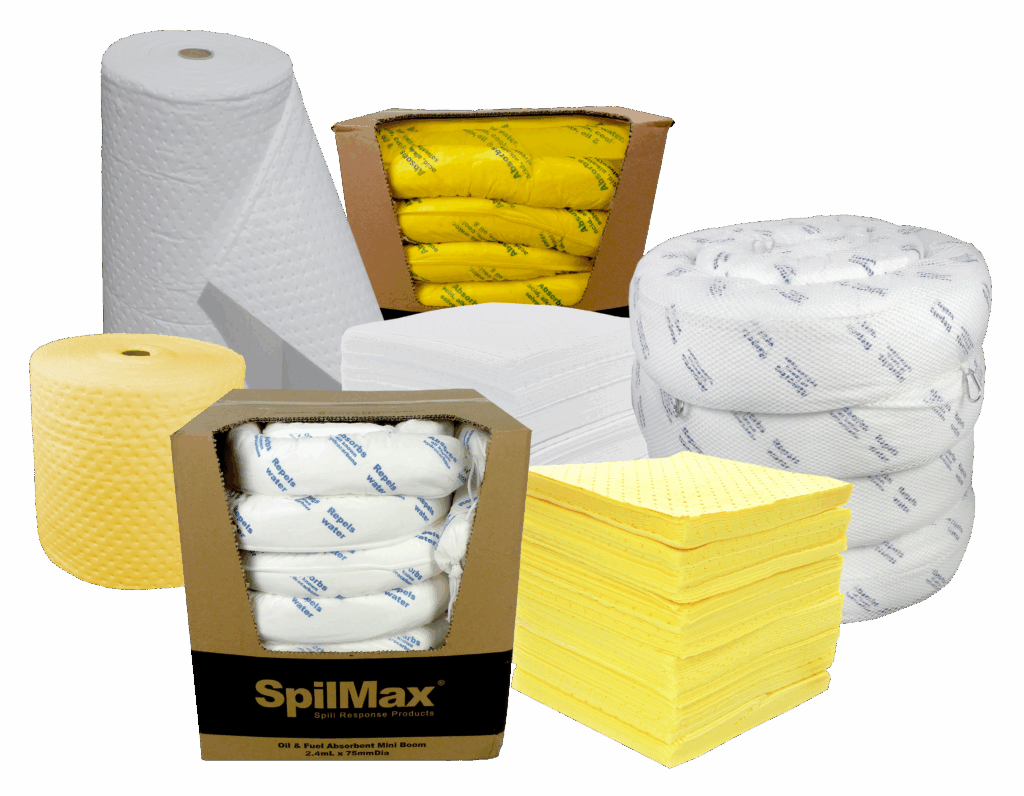
Form factor is a separate decision to material, and maps to the job:
- Pads: wipe down, drip capture, plant maintenance, final residual.
- Rolls: run out along a leaking line, under a decanting bench or across a walkway.
- Socks: ring a spill, dam a doorway, kerb line or drain approach. Containment first.
- Pillows: high capacity units for a steady drip, a sump or a compressor tray.
- Booms: long linked units for water, with rope and connectors so lengths join and anchor.
Hold all five: socks and booms to contain, pads and rolls to recover, pillows for the standing leaks that never get fixed.
Soaking up oil on water versus on hard stand
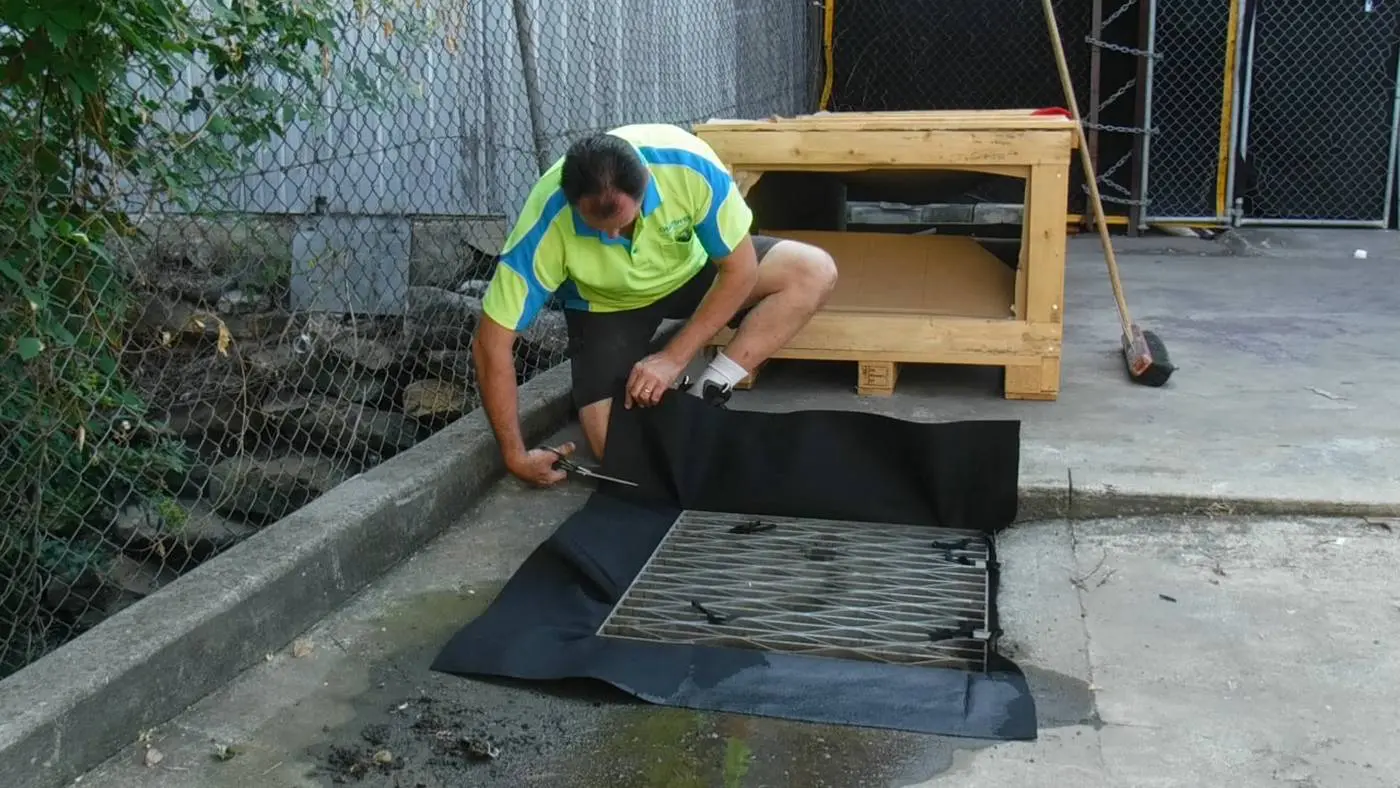
On hardstand: stop the source, seal the drain with a drain cover, ring the spill with socks, then recover with pads and rolls from the outside in. Use floor sweep last, only if a residual film remains.
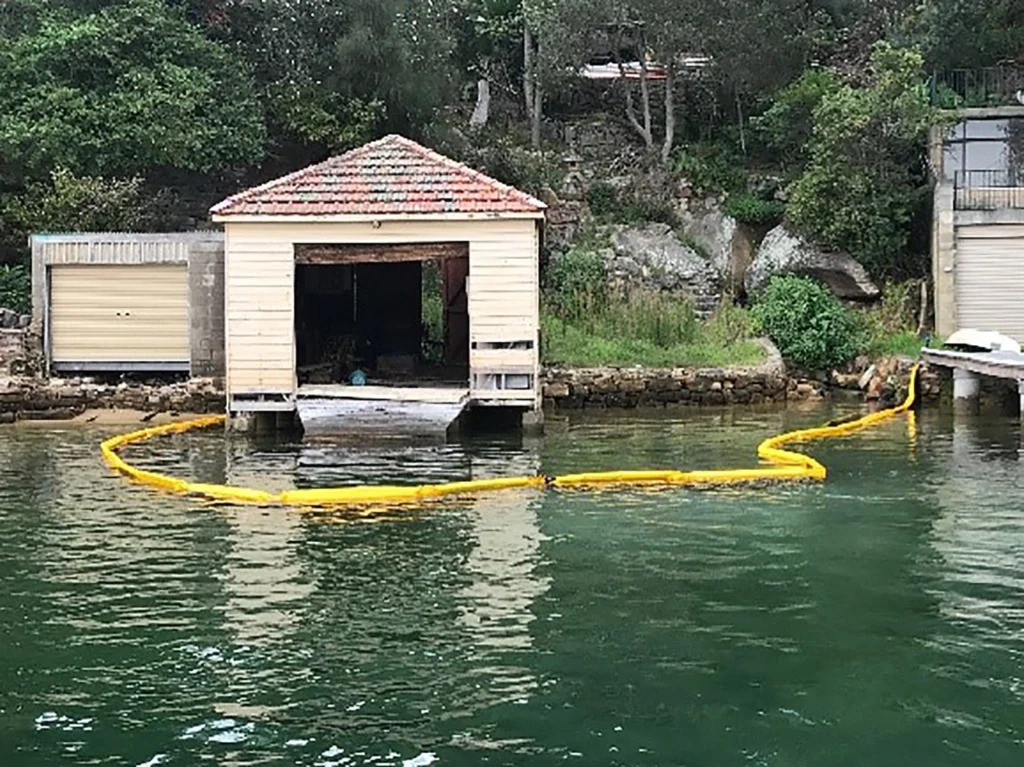
On water: contain before you absorb, always. Oil spreads faster than any absorbent can chase it, so deploy a containment boom to hold the slick, then work absorbent booms and pads inside it.
Disposing of oil soaked absorbents
Once an absorbent holds hydrocarbon it is a regulated waste. The waste code and tracking paperwork are set by your state or territory regulator, so confirm locally. Three points hold nationally:
- Never place loaded absorbent in general waste. This is the finding auditors write up most often.
- Contain it in a lidded, labelled drum, not an open skip. An overpack drum is the usual answer after a large event. Overpack Drums
- Keep the paper. The waste transfer document closes out the incident, not the clean floor.
Choosing an absorbent that will pass an audit
An auditor is not testing the pad. They are testing whether your controls match your risk assessment and whether the evidence exists.
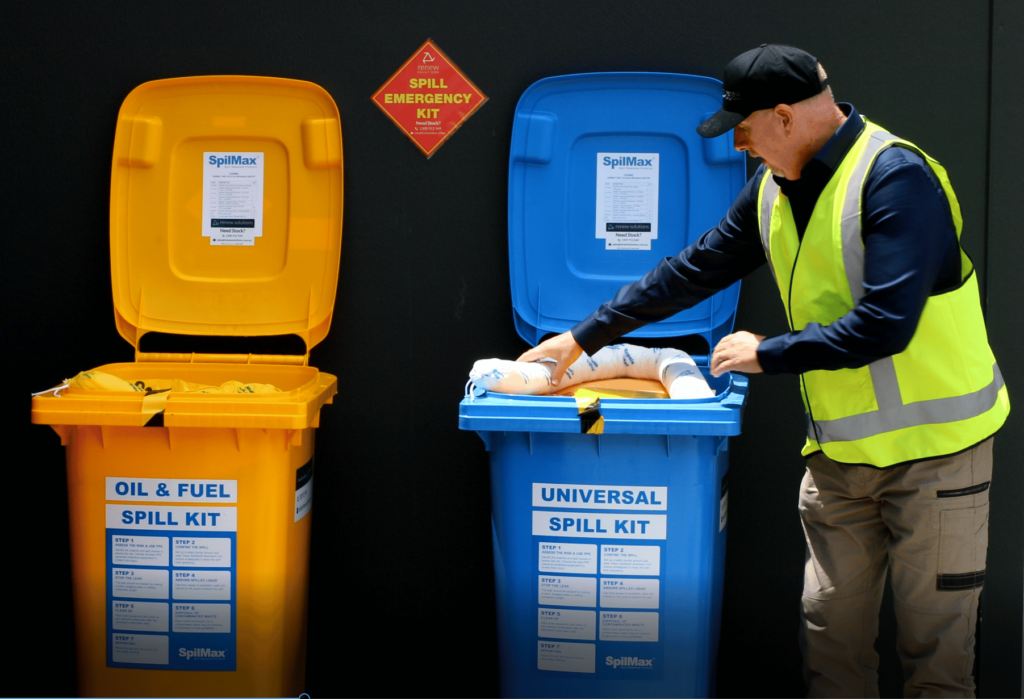
- Material matches the substance. White oil only where the risk is hydrocarbon, grey universal where the site handles hydrocarbons plus coolant or unknowns, yellow chemical for acid, caustic or solvent.
- Quantity matches the largest credible spill. If the largest single container is a 1,000 litre IBC and the bund is sized on the 110 per cent rule at 1,100 litres, absorbent stock is sized for what escapes the bund or is lost in transfer, not for the full 1,100 litres.
- Kits stocked and sealed. An opened, half empty kit is a finding on its own. Current inspection tag, intact seal, contents list on the lid.
- Stored where the spill will happen, not in a locked store 200 metres away, and opened by trained people. Spill Response Training
Where flammable and combustible liquids are stored, read the absorbent decision alongside AS 1940-2017. Where the site holds corrosives or toxics, AS 3780 and AS/NZS 4452:1997 are the references.
Oil and fuel spill kits and refills, dispatched nationwide
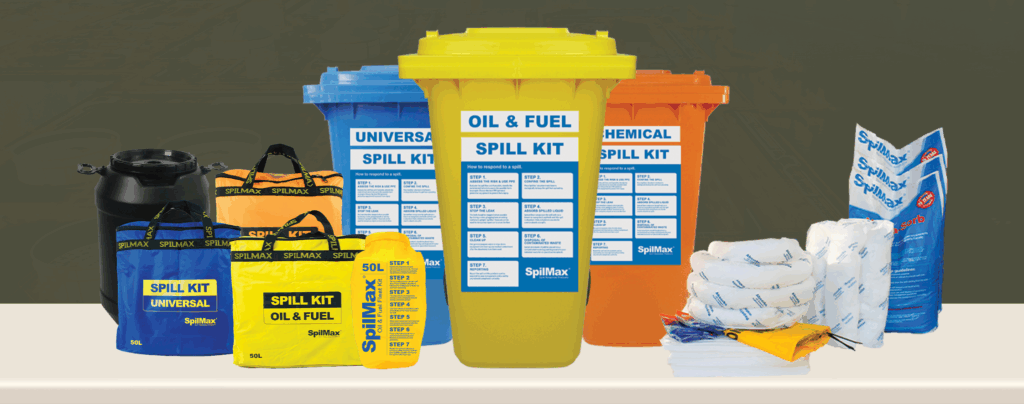
Akuna Services is 100 per cent Australian owned and operated, founded in 2016, based at Pendle Hill NSW and servicing sites nationwide. Oil and fuel, universal, chemical and marine spill kits, refills and loose absorbents in pad, roll, sock, pillow, boom and wipe form are stocked, with same day dispatch on orders placed before 11 am. Brands include Chatoyer, SpilMax, DrainSAFE, Ecocoast, Ultratech and Accumax Global.
Frequently asked questions
What soaks up oil the fastest?
Oil only meltblown polypropylene, in pad or roll form. It draws hydrocarbon in on contact, holds roughly 10 to 25 times its own weight, and needs no shovel or broom.
Does kitty litter work on an oil spill?
It will lift a residual film and restore traction on a workshop floor. As a primary response it is poor: granular clay holds around its own weight or less, sinks in water, and produces roughly two to three times the waste tonnage of a synthetic pad for the same spill.
What absorbent should I use on water?
An oil only, hydrophobic product that floats when loaded, meaning absorbent booms and pads. Contain the slick with a containment boom first, then recover inside it. Clay and untreated organics sink or waterlog.
How do I dispose of oil soaked pads in Australia?
As a regulated hydrocarbon contaminated waste, through a licensed contractor, in a lidded and labelled drum rather than general waste. The waste code and tracking paperwork are set by your state or territory regulator. Keep the transfer document with the incident record.
Need oil and fuel absorbents that hold up under audit? Call Akuna Services on 1300 912 949 or browse the oil and fuel spill kit range, dispatched same day on orders placed before 11 am. If you would rather not manage the stock in house, the spill kit servicing and maintenance program covers supply, auditing and management across a whole site.