
Chemical Spill Kits
Showing all 5 results
-
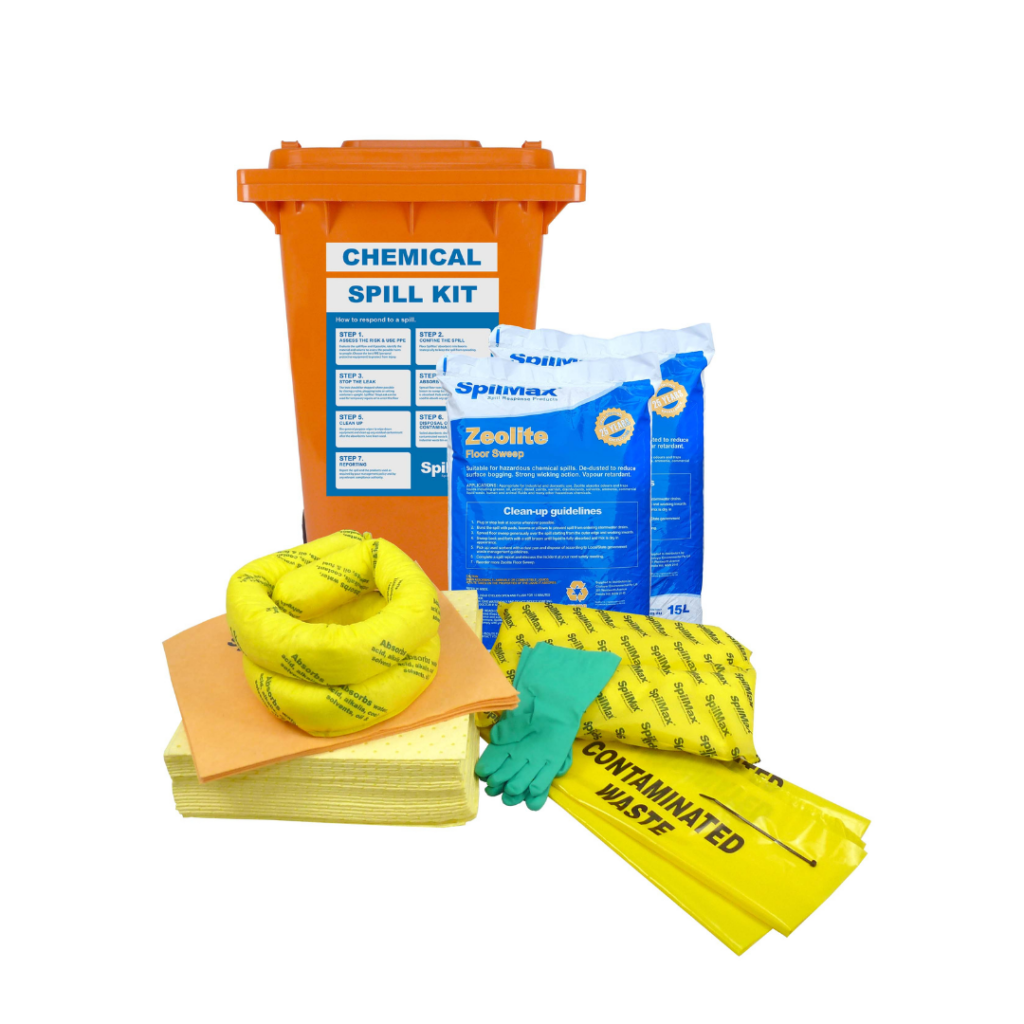
140L Chemical Workplace Spill Kit with 15L Floor Sweep – 40kg
$445.50 (inc. GST)
-
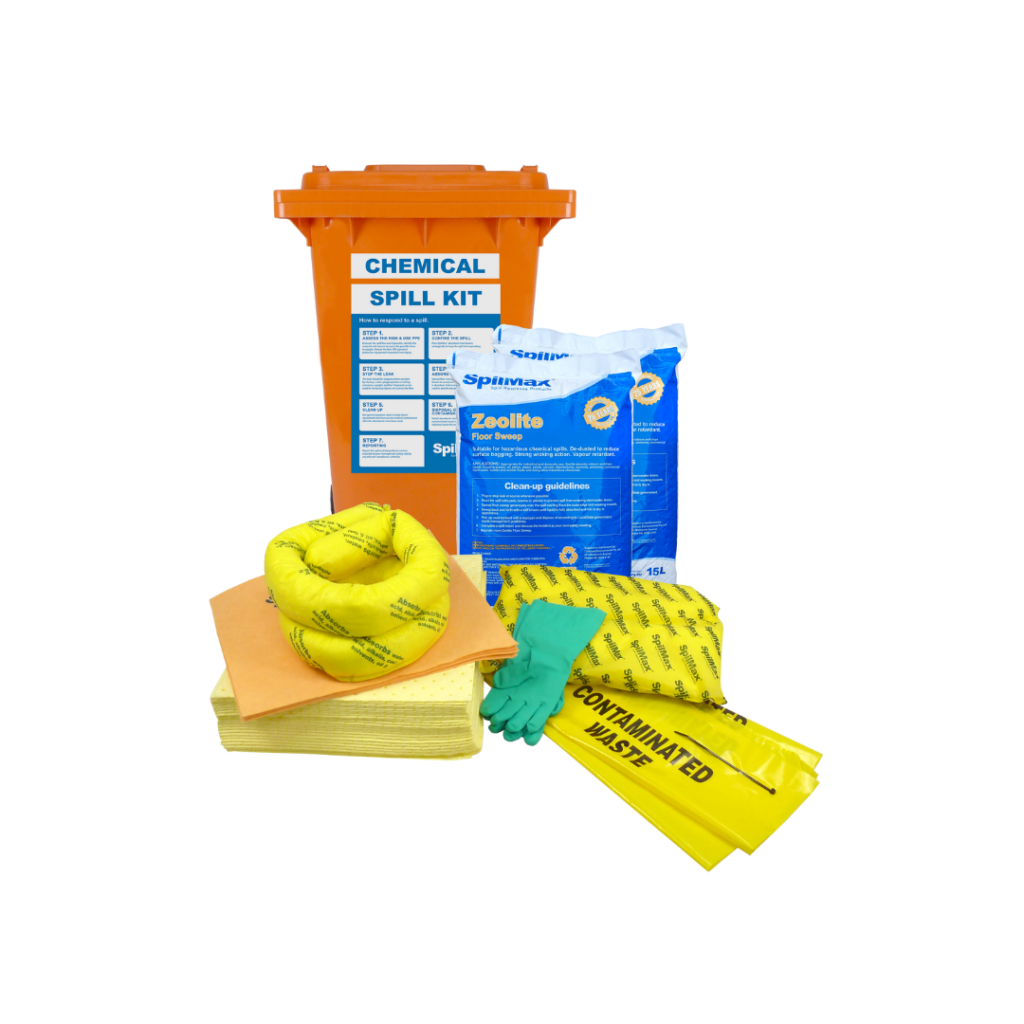
140L Chemical Workplace Spill Kit with Floor Sweep – 35kg
$522.50 (inc. GST)
-
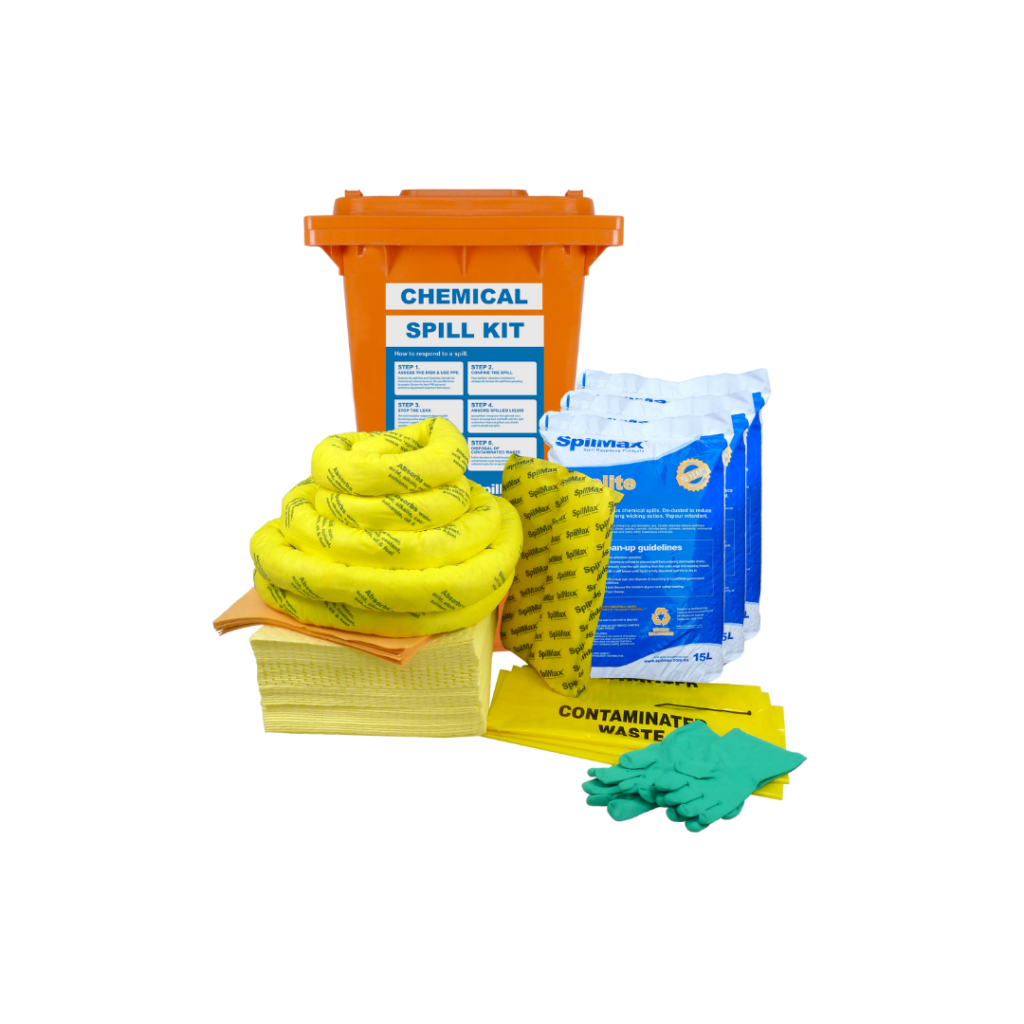
240L Chemical Workplace Spill Kit with 15L Floor Sweep – 55kg
$764.50 (inc. GST)
-
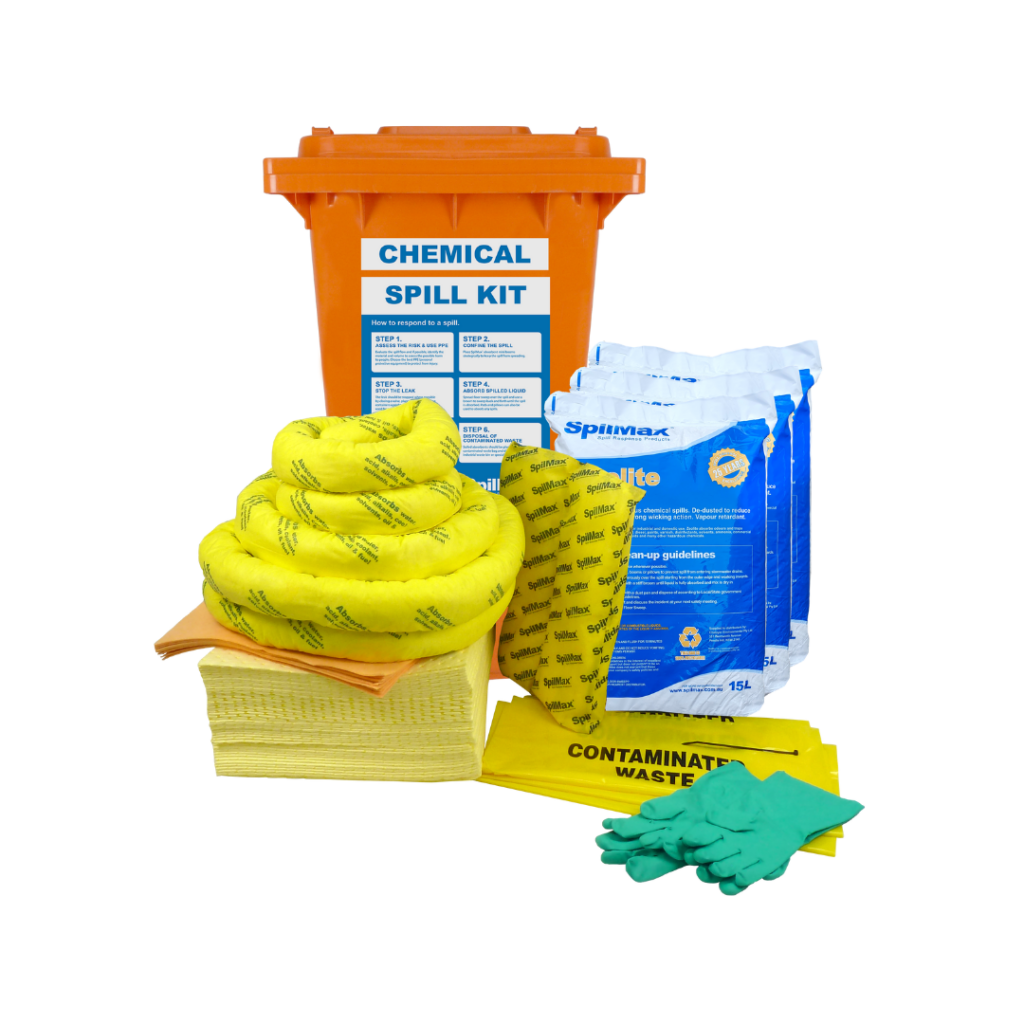
240L Chemical Workplace Spill Kits with Floor Sweep – 60kg
$687.50 (inc. GST)
-
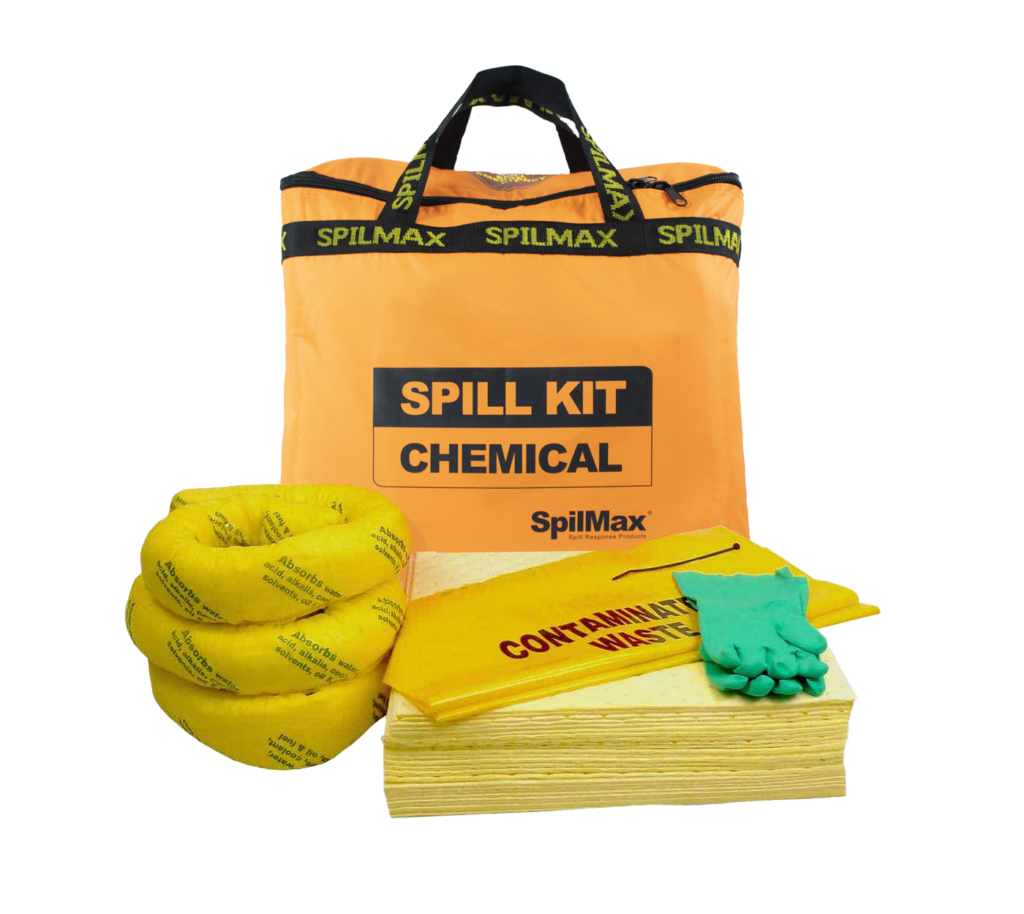
50L Chemical Vehicle Spill Kit Bag – 4kg
$242.00 (inc. GST)
Extra Information
Chemical Spill Kits
Dependable Chemical Spill Kits for Australian Workplaces
Chemical spill kits are emergency response packages built for hazardous substances: acids, alkalis, solvents and other dangerous goods. Each pairs chemically resistant absorbents with the PPE, disposal bags and instructions needed to contain a release and bag it for licensed disposal.
Akuna Services has supplied chemical spill kits since 2016. We are 100 per cent Australian owned and operated, we dispatch same day on orders placed before 11 am, and we ship Australia wide. The range runs from a 50 L vehicle bag to 240 L wheeled workplace kits, most with floor sweep.
50 to 240 L
From a vehicle bag to wheeled workplace kits
5 kits
A vehicle through to a full plant
11 am
Order cut off for same day dispatch
100%
Australian owned and operated
On this page
- 01What a Hazchem Spill Kit Is Built to Handle
- 02Our Range of Chemical Spill Kits by Capacity
- 03What Is Inside an Akuna Chemical Spill Kit
- 04PPE, Neutralisers, Disposal Bags and Refills
- 05Chemical Spill Kits for Laboratories and Manufacturing
- 06Storing Kits Near Dangerous Goods and Decanting Points
- 07Absorbents That Hold Acids, Alkalis and Solvents Safely
- 08Protecting Your People and Meeting Your Obligations
- 09Australia-Wide Delivery on Every Hazchem Kit
- 10Matching a Chemical Spill Kit to Your Safety Data Sheets
- 11FAQs
What a Hazchem Spill Kit Is Built to Handle
A chemical kit exists for the substances where the wrong absorbent makes things worse. Oil-only media is matched to hydrocarbons and will not serve a corrosive, and a universal kit absorbs the liquid but leaves the responder short on protection.
Typical releases a chemical kit is bought for:
- Acids and alkalis from dosing systems, water treatment and battery rooms
- Solvents, thinners, paints and cleaning chemicals
- Laboratory reagents and sample volumes
- Dangerous goods decanted from drums and IBCs, or damaged in transit
- Mixed or unidentified liquids, where you assume the worst
The kit does not replace the safety data sheet. It gives your people the means to act on what the SDS tells them.
Our Range of Chemical Spill Kits by Capacity
Five products cover a vehicle through to a full plant.
| Kit | Packed weight | Format |
|---|---|---|
| 50 L Chemical Vehicle Spill Kit Bag | 4 kg | Soft bag |
| 140 L Workplace Kit with Floor Sweep | 35 kg | Wheeled bin |
| 140 L Workplace Kit with 15 L Floor Sweep | 40 kg | Wheeled bin |
| 240 L Workplace Kit with 15 L Floor Sweep | 55 kg | Wheeled bin |
| 240 L Workplace Kit with Floor Sweep | 60 kg | Wheeled bin |
The litre figure is absorbent capacity, not the volume of the bin, and the kilogram figure is the packed weight, so you can plan how it gets moved. Floor sweep is the granular component, for ground too rough for a pad.
What Is Inside an Akuna Chemical Spill Kit
Each kit is packed so a responder can work the spill through to bagged waste without leaving the area. A chemical kit typically holds:
- Chemically resistant pads for the bulk of the pick-up
- Socks to dam the spill short of a drain or doorway
- Floor sweep for rough surfaces and residue
- PPE, disposal bags and ties for saturated absorbent
- Instructions a non-specialist can follow under pressure
Workplace kits come in sealed wheeled bins that keep contents dry and uncontaminated. The 50 L vehicle bag is soft sided at 4 kg packed, so it travels with the job.
PPE, Neutralisers, Disposal Bags and Refills
Gloves and goggles get used for jobs that are not spills, so PPE runs short first. We stock personal protective equipment separately, so the kit stays intact and day to day items come from elsewhere.
Whether a spill is neutralised before recovery is a decision your safety data sheet makes, not one the kit makes. Our chemical kits are built around absorbent capture and containment, which suits most site releases. Where your SDS calls for a neutralising agent, it is selected against that chemical and held with the kit.
Refills matter as much as the kit. We supply vehicle and workplace refills, so a used kit is restored as one line item.
RelatedAbsorbents →
Chemical Spill Kits for Laboratories and Manufacturing
Laboratories deal in small volumes and high consequence. A 50 L bag or a 140 L workplace kit suits bench work, sample handling and reagent storage, where the credible release is a broken container, not a tank.
Manufacturing and industrial sites run the opposite profile: drums and IBCs, dosing lines, decant benches and transfer hoses, over floors that drain somewhere. Those sites take a 240 L kit at the store and smaller kits at the point of use. We supply industrial, mining, civil, logistics, utilities, local government, defence and marine sites.
Storing Kits Near Dangerous Goods and Decanting Points
Put the kit where the spill will be, within sight and unobstructed. One rule is worth stating plainly: store it outside the bund and the dangerous goods store. If the bund is what failed, a kit inside it is one you cannot use.
Containment does the heavy lifting before the kit is opened. Bunding is sized at 110 per cent of the largest container, so a 1,000 L IBC needs 1,000 L x 1.1 = 1,100 L of bund capacity. With that in place the kit covers decant drips, hose drainage and residual film, which is why a 140 L kit is often right next to bulk storage.
RelatedBunded Pallets →
Absorbents That Hold Acids, Alkalis and Solvents Safely
Chemical absorbent is chosen for what it will not do. Polypropylene media is inert across a wide range of acids, alkalis and solvents, so it holds the liquid without dissolving, reacting or generating heat while a responder stands over it. It encapsulates rather than converts, keeping the waste stream predictable.
Floor sweep adds coverage where pads cannot work: gravel, broom-finished concrete, expansion joints and plant footings.
Kits are supplied sealed, so the absorbent reaches you clean and stays that way. We stock Chatoyer, SpilMax, Ultratech, Accumax Global, DrainSAFE and Ecocoast.
Protecting Your People and Meeting Your Obligations
The WHS Regulations 2011 set the framework for hazardous chemicals: a register, current safety data sheets, risk controls and the means to respond to a spill. AS 3780 covers corrosive substances, AS 1940-2017 applies to flammable and combustible liquids including solvents, and AS 4326-2008 covers oxidising agents.
Chemical handling also brings first aid infrastructure into scope: where corrosives are present, an eye wash or safety shower is part of the control set, and we inspect them.
For an auditor, evidence is the kit plus the paper trail: locations, contents, inspection dates and training records. Our servicing program produces it, and if your system is built to ISO 14001, our training helps you meet those requirements.
Australia-Wide Delivery on Every Hazchem Kit
Orders placed before 11 am are dispatched the same day and ship Australia wide from Pendle Hill in Western Sydney. That covers the two situations people buy chemical spill kits in: a site mobilising, and a site restocking after an incident.
Onsite work is narrower than delivery. Servicing, risk assessment, eye wash and safety shower inspection, installation and in person training are primarily New South Wales, with limited coverage into Queensland and Victoria. Products ship anywhere in Australia. Training is a 60 to 90 minute practical workshop aimed at ISO 14001 compliance, at Sydney metro locations on weekdays.
Matching a Chemical Spill Kit to Your Safety Data Sheets
Your SDS library already holds the answer. Work through it in order:
- 1List every chemical on site and pull the accidental release and exposure control guidance from each SDS.
- 2Group by hazard class, so acids, alkalis, solvents and oxidisers are each accounted for.
- 3Size to the largest container in each area, then check what the bunding carries.
- 4Check the PPE the SDS calls for against what the kit holds.
- 5Place, sign and schedule. Monthly inspection, restock after use, documented trail.
Rather than do that against a product grid, call 1300 912 949. We will match kits to your chemical register and set up servicing so they stay audit ready.
FAQs
Can a chemical spill kit handle any chemical?
Chemical kits are built for a broad range of acids, alkalis and solvents, but no kit covers every substance. Check the accidental release guidance in your safety data sheet, particularly for oxidisers and reactive chemicals.
What is the difference between a chemical kit and a universal kit?
A universal kit absorbs any liquid, including water, and suits mixed spills on general floors. A chemical kit uses resistant absorbent and is packed with the protection and disposal materials an aggressive substance demands.
Why do the kits include floor sweep?
Pads need surface contact, which they do not get on gravel, broom-finished concrete or plant footings. Floor sweep is a granular absorbent you spread over the spill, then sweep up and bag. The 140 L and 240 L kits include it.
How often should a chemical spill kit be inspected?
Monthly inspection is the practical standard, plus an immediate restock after use. Confirm the seal is intact and the contents match the kit list. Our servicing program runs the inspections and leaves you the record.
Want to book a spill training session?
Get in touch with our expert team and we will guide you through the process.